




















Imagine a world where we don’t just treat lung cancer — we squeeze it out before it even takes root. That world may be closer than we think. Researchers have now initiated human studies of a vaccine aimed at preventing lung cancer, a disease that for decades has been one of the toughest to beat. In this article I’ll take you through what’s happening, how it works, and who might benefit. I’ll also dig into what this means for you (yes, you) and why it might soon shift from “science news” into real-life hope.
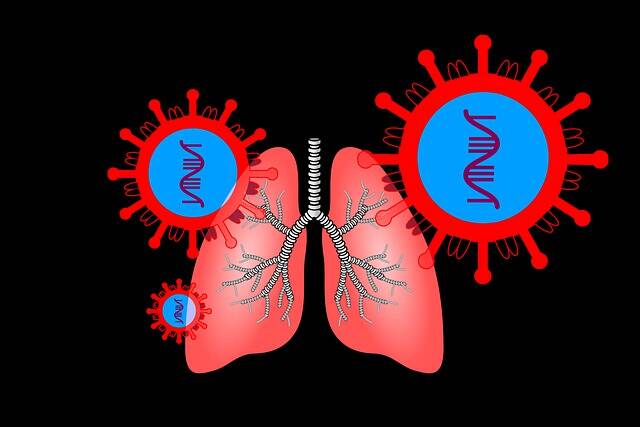
Because let’s face it: lung cancer has long been a heavy hitter in the “bad news” column. But what if we could stop it in its tracks? That’s the promise here — and we’ll break it down without the scientific jargon trip-wire.
What’s going on? The big headline
The key news is that scientists have started human trials of a vaccine designed to prevent lung cancer. Up until now many efforts have focused on treating lung cancer after it appears, but this is one of the first times a proactive vaccine strategy is entering people. The goal: train the immune system to recognise and eliminate the early-onset changes that could lead to lung tumours.
Why is this huge? Because lung cancer remains a leading cause of cancer-related death globally, thanks in large part to late detection and hard-to-treat disease. A preventive vaccine would be a paradigm shift: instead of waiting for the tumour and then trying to fight it, we stop it before it even shows up.
Why lung cancer is such a tough opponent
Here are some of the reasons lung cancer has been such a challenge:
-
Late detection: Many lung cancers don’t create noticeable symptoms until they’re advanced, which limits curative options.
-
Aggressive biology: Lung tumours often grow and spread quickly, and they may become resistant to therapy.
-
Risk factors: Smoking remains a major risk, but there are also non-smokers who get lung cancer — indicating complex causes.
-
Limited prevention tools: Apart from reducing exposure (e.g., tobacco smoke, air pollution), we haven’t had a vaccine that targets lung cancer specifically.
With those hurdles, the idea of a vaccine takes on special importance: it doesn’t rely purely on behaviour change or early detection, but on the immune system taking action.
How does a lung-cancer vaccine work?
Let’s simplify: a vaccine typically trains your immune system to recognise something bad and to attack it. In the case of lung-cancer prevention, the idea is to train the immune system to spot early malignant changes or cells that are highly likely to turn malignant — before they become a fully-blown tumour.
Here are the core mechanisms involved:
-
Identification of target antigens: Scientists identify molecules (proteins, mutated bits of DNA) that appear on pre-cancerous or early-cancer cells in the lung.
-
Vaccine delivery: These target molecules (or representations of them) are delivered in a vaccine formulation — so your immune system ‘sees’ them and recognises them.
-
Immune activation: Your immune system (T-cells and other components) is trained to recognise those targets as “bad” and to kill or control cells bearing them.
-
Immune memory: Ideally, the immune system retains a memory, so if even a few abnormal cells attempt to arise later, your body can act fast and stop them from growing.
What makes this different from standard vaccines (for viruses) is the target: instead of a virus, the target is cells that are abnormal or potentially pre-cancerous. The theory has been around, but the real test is safety and efficacy in humans.
What we know so far (and what we don’t)
Because this is still early days, there are exciting parts and caution flags. Here’s a balanced view:
The exciting parts
-
Human trials have begun — that means researchers believe the vaccine is safe enough to test in people.
-
If successful, this could become a tool for high-risk populations (more on that later).
-
It represents a shift toward preventive oncology rather than reactive treatment.
What we don’t yet know
-
Efficacy: Will the vaccine actually reduce incidence of lung cancer in humans? That has to be proven.
-
Long-term safety: Because this is preventive (given to people who may not yet have disease), safety standards are extremely high.
-
Who exactly should receive it: Risk stratification needs to be defined — who are the best candidates?
-
Cost, access & implementation: Once approved, who will pay for it? How will it be rolled out globally?
-
Will it target all lung cancers? Lung cancer is not one disease — there are multiple subtypes (small cell, non-small cell) and multiple causes (smoking, pollution, genetics). It may not work equally across all types.
Who could benefit — and who is a candidate?
Since this is preventive, it raises a key question: who should have it? It’s unlikely (at least initially) to be offered to everyone. Rather, the ideal candidates might include:
-
Current or former heavy smokers: They carry elevated risk of lung cancer and thus might benefit more from preventive vaccination.
-
People with other lung-risk exposures: For example, individuals exposed to high levels of air pollution, radon, occupational exposures (mining, asbestos).
-
People with strong family history of lung cancer: Genetics may play a role.
-
Those with pre-cancerous lung lesions or high risk based on screening: If someone has suspicious nodules in the lung, a preventive vaccine might be considered in the future.
It’s worth noting: for a healthy person with low risk, the cost/benefit ratio may be different — so patient selection and guidelines will be critical.
Why this matters for prevention (and public health)
The ripple effects of a lung-cancer vaccine could be massive:
-
Reduced mortality: If lung cancer incidence drops, deaths drop.
-
Healthcare cost savings: Treating advanced lung cancer is expensive — if we prevent cases, we reduce burden on health systems.
-
Shifts in cancer-control strategy: Prevention becomes more active and high-tech, rather than only early detection and treatment.
-
Hope for other cancers: Success here could fuel similar vaccines for other challenging cancers.
Imagine this: decades from now, instead of hearing “caught late, limited options”, people might hear “there’s a vaccine — you’re protected.” That’s the vision.
How will it change the conversation around lung cancer?
Usually, lung cancer stories revolve around diagnosis, treatment side effects, outcomes. But a preventive vaccine turns the conversation on its head:
-
From reactive to proactive: We go from “treating once it appears” to “stopping it before it appears.”
-
Empowerment: People can feel less helpless — you don’t just monitor for risk, you act on it.
-
New risk-assessment models: Doctors will need to consider immunization history as part of lung-cancer risk profiles.
-
Changing stigma: Because lung cancer is often associated with smoking, having a prevention tool could help broaden understanding (non-smokers get lung cancer too) and reduce blame/fear.
What you should ask your doctor (if you’re at risk)
If you’re in a higher-risk group for lung cancer, here are some questions worth discussing with your healthcare provider:
-
“Am I eligible for any lung-cancer prevention trials?”
-
“What is my current level of risk (based on smoking history, exposure, family history)?”
-
“When might this vaccine become available, and will I qualify?”
-
“Are there lifestyle or exposure-reduction steps I should prioritise anyway?”
-
“How does early detection fit alongside prevention?” (Even with a vaccine, screening may still matter.)
Lifestyle & risk-reduction still matter
A vaccine doesn’t mean you can ignore other prevention strategies — quite the opposite. Even while immunisation advances, these remain fundamentals:
-
Stop smoking (or don’t start) — the single biggest preventable risk.
-
Avoid second-hand smoke.
-
Limit exposure to radon, asbestos, air pollution.
-
Maintain a healthy diet, exercise, avoid carcinogens where possible.
-
Participate in lung-screening (CT scans) if you’re high risk and local guidelines recommend it.
In short: a vaccine is a powerful tool, but not a magic wand — layered prevention remains smart.
Risks, ethical and logistical challenges
No major medical advance comes without questions. Here are some of the challenges:
-
Risk vs benefit: Giving a vaccine to people without disease means the bar for safety is high.
-
Equity and access: Will high-risk individuals in poorer countries get access? Or will it be limited initially in developed settings?
-
Uptake and trust: Vaccine-hesitancy could impair reach; people may ask “why take a vaccine for something I may never get?”
-
Cost-effectiveness: Will health systems bear the cost? Insurance coverage?
-
Mutation of cancer biology: Tumours evolve and may escape immune detection; will the vaccine keep up?
These are big questions — but they don’t negate the promise.
The timeline: when could this become real?
We’re still in the early phases, so here’s a rough-and-ready timeline:
-
Phase 1/2 trials: Focus on safety and early markers of immune response. Already underway.
-
Phase 3 trials: Larger populations, looking at whether lung cancer incidence drops among vaccinated versus control groups.
-
Regulatory approval: If trials succeed, then regulatory bodies review safety/efficacy, followed by licensure.
-
Implementation: After approval, guidelines must be set for who gets it, how often, side-effects monitoring, cost/payment models.
-
Widespread rollout: High-risk populations first; eventually broader rollout depending on data.
We could be several years away from full real-world use — but that doesn’t mean the story stops now.
Myths & misunderstandings to clear up
Because this is a headline-grabbing topic, misunderstandings are likely. Let’s clear them up:
Myth 1: “If the vaccine works, I don’t have to quit smoking.”
Reality: No — smoking remains the biggest risk; the vaccine is not a free pass.
Myth 2: “This vaccine will stop all lung cancer.”
Reality: Unlikely. It will probably reduce risk in certain populations, but not wipe out all lung cancer.
Myth 3: “It must be dangerous because it attacks my immune system.”
Reality: Like any vaccine, safety is a top priority. The goal is to train the immune system, not over-activate it.
Myth 4: “Only smokers need worry.”
Reality: Non-smokers can and do get lung cancer. Risk factors include pollution, radon, genetics.
What this means for you — the big-picture
Even if you’re not high-risk right now, this development is relevant. Here’s why:
-
It signals that medicine is shifting from “react when disease hits” toward “prevent before it hits.”
-
It raises awareness of lung cancer risk in broader populations.
-
It may influence how you talk with your doctor about lung health, screening, exposure reduction.
-
If you are high risk, it gives new hope and something to watch.
Stay informed. Ask questions. And if the vaccine becomes available where you live, you’ll be better prepared.
Conclusion
The launch of human trials for a lung-cancer vaccine marks a pivotal moment in cancer prevention. While there’s much we still need to learn — about efficacy, safety, who should receive it, and how it will be implemented — the very fact that this path is open is cause for optimism.
For individuals, particularly those at higher risk, this is a moment to stay engaged with your health: understand your risk profile, talk to your doctor, keep up with prevention and screening.
For society, it’s a fresh chapter: one where vaccinating against certain cancers may no longer be science fiction, but part of standard care.
And for you, the reader doing your homework — you’re ahead of the curve. You’ll know the questions to ask, the hope behind the headlines, and where this could lead.
Stay tuned, stay informed, and stay proactive — because the future of lung cancer prevention may just be a shot away.

TechnologyHQ is a platform about business insights, tech, 4IR, digital transformation, AI, Blockchain, Cybersecurity, and social media for businesses.
We manage social media groups with more than 200,000 members with almost 100% engagement.