

















A brand journey begins long before a customer speaks with a sales team or walks into an event space. It can start with a search result, an ad, a social post, or a registration page. This article was developed by reviewing business event planning practices, brand consistency guidance, and event experience trends to explain how companies can make each touchpoint feel connected and professional.
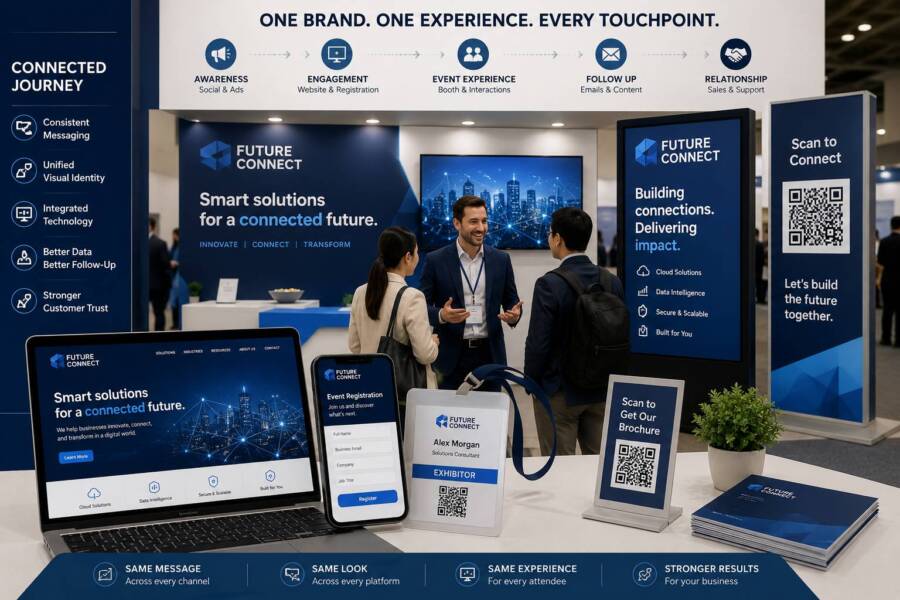
For many organizations, the problem is not a lack of strong ideas. The problem is that each part of the experience is often built by a different team. Marketing may manage campaigns. Sales may handle follow-up. Operations may manage event tools, displays, and check-in. When those groups are not aligned, the audience can feel the gaps.
A booth may look different from the website. A demo screen may use old messaging. A follow-up email may sound nothing like the conversation that happened in person. These small breaks can make a brand feel less prepared, even when the product or service is strong.
Brand Consistency Starts Before the Event
Brand consistency is more than using the right colors and logo. It means every interaction feels like it belongs to the same company. That includes visuals, tone, message, timing, and service.
This is why an event technology planning timeline matters early in the process. It helps teams decide which tools, assets, devices, and approvals are needed as the event approaches. It also keeps branding from becoming a last-minute task.
The first stage should focus on the audience and the goal. Is the event meant to generate leads, support current customers, launch a product, or build awareness? Once the goal is clear, teams can plan the right mix of hardware, software, content, and staff support.
A clear timeline can include:
- Registration platform setup
- Lead capture tools
- Presentation screens and demo devices
- Event app content
- Wi-Fi and charging needs
- Digital signage
- Backup files and equipment
- Post-event data handoff
Each item should connect to the same brand message. If the website invites people to “see the future of work,” the booth, demo, and follow-up content should support that idea. If the brand promises simple solutions, the event experience should feel simple too.
Technology Should Support the Story
Technology can improve an event, but only when it supports the brand story. Screens, apps, QR codes, badge scanners, and demo stations should not feel like separate tools. They should work together to guide the visitor.
For example, a registration page can introduce the main message. A confirmation email can prepare attendees for what they will see. At the event, signage can repeat the same promise in short, clear language. A demo station can show the promise in action. After the event, sales follow-up can reflect the visitor’s actual interests.
This kind of flow feels polished. It also helps teams collect better data. When registration systems, lead capture tools, and customer relationship management platforms are aligned, sales teams can follow up with more useful context.
Testing is a key part of this process. Teams should check links, forms, videos, screens, QR codes, badge scanners, and file access before the event begins. A broken link or frozen screen can distract from the brand experience. A tested setup helps staff focus on people, not problems.
Backup planning also protects the brand. Extra chargers, cables, devices, printed materials, offline files, and support contacts can prevent small issues from becoming public frustrations. A brand does not need every moment of the experience to be perfect.. It needs the experience to feel controlled and professional.
Cohesion Requires Team Alignment
A cohesive brand journey is easier to create when teams stop treating channels as separate projects. Digital marketing, live events, sales conversations, and follow-up campaigns should all support one shared message.
This starts with a simple brand brief. The brief should explain the audience, the main promise, the approved language, the visual direction, and the desired next step. Everyone involved should use the same brief, from designers to event staff.
It also helps to assign one person to watch the full journey. That person does not need to own every task. Their role is to spot gaps. Does the landing page match the booth? Does the sales deck match the event signage? Does the email follow-up match what attendees actually experienced?
Teams should also review event data after the experience ends. Registration numbers, booth visits, scanned leads, demo requests, and follow-up engagement can show what worked. These insights can improve the next campaign and future brand experiences.
Consistency should not make a brand feel stiff. It should make the experience easier to understand. People should know where they are, what the company offers, and what to do next. That clarity builds trust.
A Strong Brand Journey Feels Effortless
A cohesive brand journey takes planning, yet the final result should feel simple to the audience. Each touchpoint should make sense. Each message should build on the last. Each tool should help the person move forward.
When businesses plan early, connect teams, test technology, and align every asset, they create a more professional impression. Customers may not notice every detail, yet they feel the difference. The brand seems prepared, reliable, and easier to trust.
For companies investing in events, campaigns, and customer experiences, consistency is not just a design goal. It is a business advantage. A clear plan turns scattered interactions into one connected story.

TechnologyHQ is a platform about business insights, tech, 4IR, digital transformation, AI, Blockchain, Cybersecurity, and social media for businesses.
We manage social media groups with more than 200,000 members with almost 100% engagement.