





















Drone technology has evolved at an incredible pace over the past decade. What began as simple remote-controlled flying devices has become an ecosystem of intelligent, autonomous aircraft capable of performing complex tasks across countless industries.
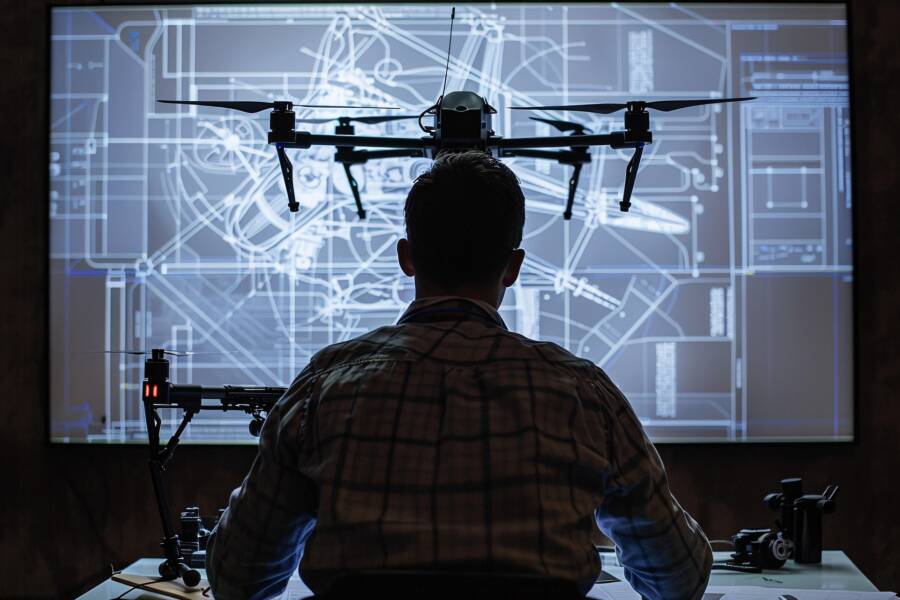
In 2026, drones are no longer just aerial cameras for photographers or hobbyists. They now inspect bridges without human intervention, deliver medical supplies to remote communities, map entire construction sites in minutes, assist emergency responders during natural disasters, monitor crops with remarkable precision, and even operate collaboratively in intelligent swarms.
Artificial intelligence, advanced sensors, longer battery life, satellite connectivity, and autonomous navigation are reshaping what drones can accomplish. Businesses, governments, and consumers alike are discovering new ways to leverage these flying robots for greater efficiency, safety, and innovation.
This article explores the most advanced drone technologies available in 2026, highlighting the breakthroughs that are redefining the future of unmanned aerial vehicles (UAVs).
1. Artificial Intelligence Makes Drones Truly Autonomous
The biggest leap in drone technology is artificial intelligence.
Modern AI-powered drones can:
- recognize people
- identify vehicles
- avoid obstacles
- analyze environments
- make flight decisions
- follow moving objects
- optimize flight paths automatically
Instead of relying entirely on a human pilot, today’s drones process vast amounts of information in real time using onboard neural networks.
This dramatically improves:
- safety
- efficiency
- mission success
- automation
Many enterprise drones now continue operating even when GPS signals become weak or unavailable.
2. Autonomous Navigation Without GPS
One of the most exciting developments is GPS-independent navigation.
Advanced drones combine:
- computer vision
- LiDAR
- radar
- inertial measurement units (IMUs)
- visual SLAM (Simultaneous Localization and Mapping)
These technologies allow drones to fly safely inside buildings, tunnels, forests, warehouses, and urban environments where satellite signals are unreliable.
This capability is becoming essential for industrial inspections and search-and-rescue operations.
3. AI Obstacle Avoidance Is Smarter Than Ever
Obstacle detection has improved dramatically.
Instead of simply stopping before hitting an object, modern drones predict moving obstacles and calculate safer alternative routes instantly.
They can identify:
- trees
- cables
- buildings
- birds
- vehicles
- people
Some enterprise drones use 360-degree sensing systems capable of monitoring their surroundings continuously.
4. Drone Swarms Are Becoming Reality
One drone is useful.
A swarm of 100 drones is revolutionary.
Swarm technology allows multiple drones to coordinate automatically using AI algorithms.
Applications include:
- military operations
- firefighting
- agriculture
- warehouse inventory
- infrastructure inspection
- light shows
- disaster response
Each drone communicates with the others while sharing data in real time.
5. Longer Flight Times Through Better Batteries
Battery improvements continue extending drone endurance.
New developments include:
- high-density lithium batteries
- solid-state battery research
- hydrogen fuel cells
- hybrid power systems
Some industrial drones now remain airborne for several hours instead of the traditional 30 to 45 minutes.
Longer endurance means fewer interruptions and greater productivity.
6. LiDAR Mapping Is Transforming Surveying
LiDAR has become one of the most valuable drone technologies.
Instead of relying only on cameras, LiDAR sends millions of laser pulses to create highly accurate 3D models.
Industries using LiDAR drones include:
- mining
- construction
- archaeology
- forestry
- utilities
- urban planning
The resulting digital maps achieve centimeter-level precision.
7. Precision Agriculture Is Becoming Fully Automated
Agricultural drones are among the fastest-growing segments of the drone industry.
Today’s systems can:
- monitor crop health
- detect diseases early
- measure soil moisture
- identify weeds
- apply pesticides precisely
- optimize irrigation
AI analyzes multispectral images to help farmers maximize yields while reducing chemical usage and operational costs.
8. Delivery Drones Are Expanding Commercial Operations
Drone delivery has moved beyond experimental trials.
Companies around the world now use UAVs for transporting:
- medicines
- laboratory samples
- groceries
- emergency supplies
- consumer packages
Autonomous route planning and obstacle avoidance make these operations increasingly reliable.
9. Search and Rescue Drones Save Lives
Emergency response teams increasingly depend on drones.
Advanced models carry:
- thermal cameras
- infrared sensors
- zoom optics
- loudspeakers
- AI detection software
They locate missing people much faster than traditional search teams, especially during floods, earthquakes, and forest fires.
10. Digital Twins Powered by Drone Data
One of the newest industrial trends is creating digital twins.
Drones capture highly detailed information that engineers transform into accurate digital replicas of:
- bridges
- factories
- cities
- wind farms
- power plants
These virtual models simplify maintenance planning and predictive analytics.
11. Military Drone Technology Continues Advancing
Defense organizations are investing heavily in:
- autonomous reconnaissance
- electronic warfare
- AI target recognition
- long-range surveillance
- collaborative drone swarms
These systems increasingly support intelligence gathering while reducing risks to personnel.
12. Cybersecurity Is Becoming a Priority
As drones become more connected, cybersecurity becomes essential.
Manufacturers are improving:
- encrypted communications
- secure firmware
- anti-jamming technology
- anti-spoofing systems
- authenticated remote control
Protecting drone networks is now as important as improving flight performance.
What Does the Future Hold?
Over the next decade, drones are expected to become even more autonomous, intelligent, and integrated into everyday life.
Emerging technologies likely to shape the industry include:
- 6G connectivity
- quantum positioning
- edge AI
- fully autonomous logistics
- robotic drone docking stations
- self-charging systems
- collaborative air traffic management
As regulations evolve alongside these innovations, drones will continue transforming industries from agriculture and construction to healthcare, public safety, and environmental conservation.
Final Thoughts
Drone technology in 2026 represents a remarkable convergence of artificial intelligence, robotics, advanced sensing, and autonomous navigation. These innovations are pushing UAVs far beyond recreational use, enabling safer infrastructure inspections, smarter farming, faster emergency response, more accurate surveying, and increasingly practical delivery services.
For businesses, adopting advanced drone solutions can unlock significant gains in efficiency, cost savings, and data quality. For enthusiasts and professionals alike, staying informed about these developments is essential, as the capabilities of drones are evolving faster than ever.
Whether powered by AI, equipped with LiDAR, or operating as part of coordinated swarms, the next generation of drones is set to play an even greater role in shaping the future of technology and society.

TechnologyHQ is a platform about business insights, tech, 4IR, digital transformation, AI, Blockchain, Cybersecurity, and social media for businesses.
We manage social media groups with more than 200,000 members with almost 100% engagement.