






















In today’s football, talent alone is no longer enough. Elite players rely on science, data, and cutting-edge technology to maximize every aspect of their performance. One of the best examples is Manchester City striker Erling Haaland, whose incredible strength, endurance, and consistency have made him one of the world’s most dominant forwards.
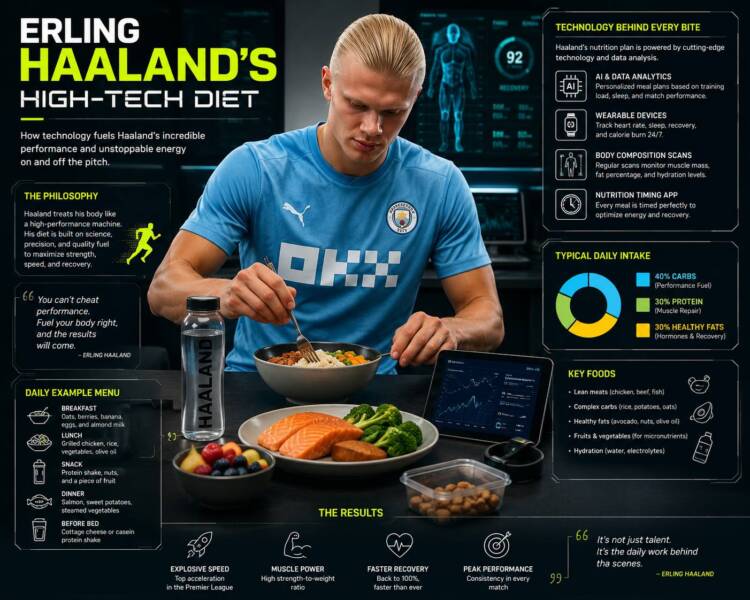
While Haaland’s natural athleticism is exceptional, modern sports nutrition and technology play a crucial role in helping him perform at the highest level. Rather than following generic meal plans, elite athletes now benefit from personalized nutrition strategies based on biometric data, recovery monitoring, wearable technology, and advanced performance analytics.
This article explores how technology influences Erling Haaland’s nutrition approach, what tools are commonly used by elite football clubs, and how these innovations help players stay healthy throughout demanding seasons.
Why Nutrition Has Become a High-Tech Science
Football has changed dramatically over the last decade.
Elite clubs now employ entire teams of specialists, including:
- Sports nutritionists
- Performance analysts
- Exercise physiologists
- Data scientists
- Medical specialists
- Strength coaches
Instead of relying on intuition, clubs continuously collect physiological data to optimize every meal and every training session.
Technology helps answer questions such as:
- How many calories should today’s training require?
- Is glycogen fully restored?
- Is hydration adequate?
- Is recovery complete?
- Should carbohydrate intake increase before the next match?
This precision helps reduce injuries while maximizing performance.
How Technology Personalizes Erling Haaland’s Nutrition
Unlike amateur athletes, professional footballers rarely follow identical meal plans.
Instead, nutrition changes according to:
- Match schedule
- Training intensity
- Travel
- Sleep quality
- Recovery status
- Body composition
- Muscle soreness
- Environmental conditions
Data collected throughout the day allows nutritionists to adjust meals almost in real time.
For example, if recovery markers suggest fatigue, carbohydrate intake may increase while anti-inflammatory foods become a higher priority.
Wearable Technology Monitors Daily Performance
One of the biggest revolutions in elite football is wearable technology.
Professional players frequently use devices that measure:
Heart Rate
Continuous heart-rate monitoring helps estimate physical stress during training.
Heart Rate Variability (HRV)
HRV provides insight into nervous system recovery.
Lower HRV may indicate:
- fatigue
- illness
- excessive training
Nutrition strategies can then be adjusted accordingly.
Sleep Tracking
Sleep has become one of the most valuable recovery tools.
Athletes monitor:
- sleep duration
- deep sleep
- REM sleep
- interruptions
- recovery quality
Poor sleep often results in adjustments to both training load and nutritional intake.
AI Is Changing Sports Nutrition
Artificial intelligence is becoming increasingly important in elite sports.
Modern AI systems analyze:
- historical training data
- injury history
- GPS tracking
- recovery metrics
- hydration
- previous match workload
The result is highly individualized nutritional recommendations.
Rather than eating identical meals every day, athletes receive nutrition plans tailored to their current physiological needs.
Body Composition Tracking
Maintaining optimal muscle mass is essential for elite footballers.
Technology allows frequent monitoring through:
DXA Scans
These scans measure:
- muscle mass
- fat percentage
- bone density
Bioelectrical Impedance
Many clubs also use advanced body composition analyzers to monitor changes throughout the season.
Small variations can influence nutritional planning.
Hydration Technology
Even mild dehydration negatively affects:
- sprint performance
- concentration
- reaction time
- endurance
Elite clubs therefore monitor hydration using:
- urine specific gravity
- sweat analysis
- electrolyte testing
- body weight changes
Personalized hydration strategies are created before, during, and after matches.
Recovery Nutrition After Matches
Recovery begins almost immediately after the final whistle.
Technology helps determine the ideal timing for:
Protein intake
Supports muscle repair.
Carbohydrates
Replenish glycogen stores.
Electrolytes
Restore hydration balance.
Anti-inflammatory foods
Support tissue recovery.
Recovery meals are often consumed within the first hour after competition.
The Role of Gut Health
Modern nutrition increasingly emphasizes gut health.
Sports nutritionists recognize that digestive health influences:
- nutrient absorption
- immune function
- inflammation
- energy production
Athletes commonly consume foods rich in:
- probiotics
- fermented foods
- fiber
- diverse fruits
- vegetables
Technology helps monitor gastrointestinal responses to different nutritional strategies.
Blood Testing Guides Nutritional Decisions
Elite footballers frequently undergo blood testing to monitor:
- iron
- vitamin D
- B vitamins
- inflammation markers
- hormones
- recovery indicators
Rather than taking supplements randomly, athletes receive evidence-based recommendations.
Can Regular Athletes Apply These Strategies?
Most recreational athletes do not have access to professional laboratories.
However, many principles remain useful:
- prioritize sleep
- eat adequate protein
- stay hydrated
- monitor recovery
- avoid excessive processed foods
- adjust nutrition according to training intensity
Even inexpensive fitness trackers can provide valuable recovery information.
Common Myths About High-Tech Athlete Diets
Myth 1: Elite athletes eat the same foods every day
Reality: Meals constantly change according to training demands.
Myth 2: Supplements replace good nutrition
Reality: Supplements complement—not replace—a balanced diet.
Myth 3: Technology replaces nutritionists
Reality: Technology provides data, but experienced professionals interpret it.
Myth 4: More protein always means better performance
Reality: Nutrient timing and overall dietary balance are just as important as protein intake.
The Future of Sports Nutrition
Emerging technologies promise even greater personalization, including:
- continuous glucose monitoring
- AI meal planning
- microbiome analysis
- genetic nutrition profiling
- real-time sweat biosensors
- digital twin athlete modeling
These innovations may soon make personalized nutrition even more precise.
Conclusion
Erling Haaland represents a new generation of footballers who combine exceptional talent with science-driven preparation. While there is no public evidence that he personally uses every technology discussed above, elite clubs increasingly rely on wearable devices, biometric monitoring, AI-assisted analysis, body composition tracking, hydration testing, and personalized nutrition to optimize player performance.
The key lesson is not to copy an elite athlete’s exact meals but to understand the principles behind them: balanced nutrition, consistent recovery, adequate sleep, hydration, and data-informed adjustments. As technology becomes more accessible, many of these evidence-based strategies are gradually becoming available to amateur athletes as well.

TechnologyHQ is a platform about business insights, tech, 4IR, digital transformation, AI, Blockchain, Cybersecurity, and social media for businesses.
We manage social media groups with more than 200,000 members with almost 100% engagement.