



















Climate change is no longer just an environmental issue. Over the next decade, it is likely to become an increasingly important economic issue too.
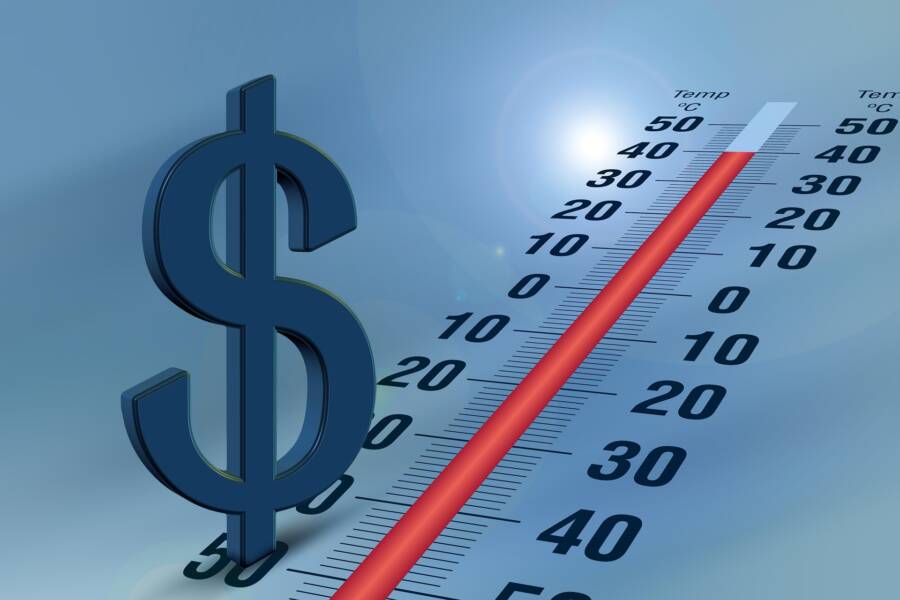
And its effects may show up in places that don’t immediately look connected to climate change.
Your grocery bill. The price of home insurance. Electricity costs. Government taxes. The value of certain properties. The price of products shipped across the world. Even where companies decide to build factories and create jobs.
Between 2026 and 2036, businesses and governments will have to deal with two economic transformations at the same time: the growing physical costs of a warmer climate and the enormous investment required to adapt to it and reduce future emissions.
That doesn’t necessarily mean the global economy is heading toward collapse. Far from it. New industries, technologies and investment opportunities will emerge as well.
But the economic winners and losers could look very different ten years from now.
So what will the economic impact of climate change over the next 10 years actually look like?
Let’s break it down.
1. Extreme Weather Will Become an Increasingly Expensive Economic Problem
The most obvious economic consequence of climate change is also one of the most expensive: physical damage.
Floods can destroy roads, homes and businesses. Wildfires can wipe out entire communities. Droughts affect agriculture and electricity generation. Extreme heat can reduce worker productivity and put additional pressure on power grids and healthcare systems.
These events don’t end when the weather improves.
Someone has to pay for reconstruction.
That could mean insurance companies, homeowners, businesses or governments — and frequently a combination of all four.
Infrastructure is becoming a particularly important issue. The World Economic Forum warned in its 2026 Global Risks Report that more frequent and intense extreme weather could overwhelm parts of existing critical infrastructure over the coming decade.
Think about what happens when an important highway, railway, port or power line goes offline.
The direct repair bill may be only part of the economic damage. Businesses can lose production, workers may struggle to reach their jobs, deliveries are delayed and supply chains have to find alternative routes.
That turns a local climate event into a much wider economic problem.
2. Insurance Could Become One of the Biggest Climate Stories of the Next Decade
Insurance may be where many households feel climate change most directly.
When insurers expect floods, fires, storms or other disasters to become more frequent or expensive, premiums generally have to reflect that additional risk.
In particularly vulnerable areas, another problem can emerge: insurance becomes extremely expensive or increasingly difficult to obtain.
That matters far beyond insurance companies.
Imagine trying to buy a house in an area where insurance costs several times more than they did a decade earlier. A property that looks affordable based on its mortgage could suddenly become far less attractive once insurance is included.
Banks also care because property is commonly used as collateral for mortgages and other loans.
The economic consequences can therefore spread from climate risk to:
- insurance premiums,
- mortgage availability,
- property values,
- bank risk,
- household wealth,
- and eventually local tax revenues.
Italy already provides an interesting example of the insurance gap. According to an IMF assessment, weather- and climate-related disasters caused about €134 billion in economic losses in Italy between 1980 and 2023, while only around 4% of those losses were insured.
As climate risks grow, deciding who ultimately pays for uninsured losses will become an increasingly important political and economic question.
3. Food Prices Could Become More Volatile
Climate change doesn’t mean that every food will continuously become more expensive.
The situation is more complicated than that.
Food prices depend on energy, transportation, labor, fertilizer, processing, exchange rates, global trade and consumer demand.
But weather increasingly adds another layer of uncertainty.
Heat waves, droughts, floods and changing rainfall patterns can reduce harvests in major agricultural regions. When production falls sharply enough, commodity prices can rise.
Recent European experience offers a glimpse of how this could work.
The European Central Bank estimated that the 2025 summer heat wave could add roughly 0.4 to 0.7 percentage points to euro-area unprocessed food prices after one year. The ECB has also noted that extreme weather contributed to major increases in commodities such as cocoa and coffee.
Over the next ten years, households may therefore have to become accustomed not simply to higher food prices, but to more unpredictable food prices.
Some years will still produce excellent harvests.
Others may produce sudden shortages.
And because agriculture operates globally, a drought thousands of kilometers away can eventually appear in the price of something sitting on your supermarket shelf.
4. Climate Change Could Make Inflation Harder to Control
This leads to a bigger economic issue: inflation.
Central banks normally try to control inflation by adjusting interest rates. But monetary policy cannot make it rain, restore a destroyed harvest or rebuild a flooded port.
That makes climate-related inflation particularly awkward.
Suppose extreme weather pushes food prices higher while drought reduces hydroelectric production and increases electricity prices.
Consumers suddenly spend more on essentials.
Businesses face higher costs.
Workers demand higher wages.
If these shocks become frequent enough, they can complicate the job of central banks trying to keep inflation stable.
Climate change will certainly not become the only cause of inflation. Geopolitical conflicts, energy markets, fiscal policy and supply-chain disruptions remain enormously important.
For example, the IMF’s July 2026 global outlook highlighted significant inflation pressure from energy, fertilizer, transport and food costs associated with geopolitical disruptions.
The important point is that climate shocks will increasingly interact with all these other pressures.
That could make the economic environment of the 2030s less predictable.
5. Working in Extreme Heat Will Cost the Economy Money
One of the less visible consequences of climate change is declining labor productivity.
This is straightforward.
A construction worker cannot safely maintain the same physical intensity outdoors at 42°C as at 22°C.
The same problem affects agriculture, logistics, manufacturing and many other occupations.
Businesses may need longer breaks, different working hours, additional cooling systems or more workers to produce the same amount of output.
That means higher costs.
Climate-related health effects could become significant on a global scale. A 2025 World Economic Forum analysis estimated that climate-driven health risks could put at least $1.5 trillion in productivity at stake by 2050 across food and agriculture, the built environment, and healthcare.
The economic implications will arrive well before 2050.
Over the next decade, companies in hotter regions could increasingly redesign working schedules around temperature.
Starting work extremely early, stopping during the hottest part of the afternoon and investing in cooling technology may eventually become economic necessities rather than employee perks.
6. Some Homes Could Lose Value While Others Become More Desirable
Climate risk could gradually reshape real-estate markets.
Location has always been one of the biggest factors determining property prices.
Climate resilience may increasingly become part of what “good location” means.
Buyers could start paying more attention to questions such as:
Is this property in a flood zone?
How extreme will summer temperatures become?
Is water scarcity a concern?
How expensive is insurance?
Does the building need air conditioning for several months each year?
Can the local electricity grid handle extreme heat?
Meanwhile, homes with better insulation, efficient cooling, solar panels, batteries, shaded outdoor areas and protection against flooding could become more attractive.
The effect will vary dramatically by city and country.
But by 2036, climate risk could be a much more important factor in determining property value than it is today.
7. Governments Will Face a Huge Infrastructure Bill
Climate adaptation costs money.
Cities need better drainage to cope with extreme rainfall.
Coastal areas may need flood defenses.
Electricity networks have to cope with higher demand and extreme weather.
Water infrastructure may need expansion.
Roads, bridges and railways may require upgrades to withstand temperatures and weather conditions they weren’t originally designed for.
At the same time, many governments already face high debt and pressure to spend more on pensions, healthcare, defense and other public services.
That creates a difficult choice.
Spend heavily today to make infrastructure more resilient — or risk paying much more after future disasters.
This is one reason climate change increasingly belongs in conversations about government budgets rather than only environmental policy.
8. Global Supply Chains Will Adapt to Climate Risk
One of the biggest lessons businesses learned during the COVID-19 pandemic was that extremely efficient supply chains can also be extremely fragile.
Climate change adds another risk.
Flooded factories, drought-affected shipping routes, damaged ports and extreme weather can interrupt production thousands of kilometers away.
A striking example came from the Panama Canal drought of 2023–2024. Lower water levels forced authorities to reduce ship traffic, leading to rerouting, higher shipping costs and delivery disruptions.
European waterways have faced similar problems when low water levels restricted shipping on major rivers. The World Economic Forum notes that low water levels on the Rhine and Danube in 2018, 2022 and 2025 raised costs and delayed industrial deliveries.
Companies are unlikely to abandon global trade.
Instead, they may increasingly diversify suppliers, hold larger inventories and locate production closer to major markets.
That’s safer.
But it is often more expensive.
9. The Energy Transition Will Create Winners as Well as Losers
So far, this article might sound overwhelmingly negative.
But climate change will also drive one of the largest investment cycles in modern history.
Massive amounts of capital are moving toward:
renewable energy, batteries, electricity networks, electric vehicles, building efficiency, heat pumps, water management, climate-resilient agriculture and energy storage.
Entire industries could grow because governments and companies need technologies that either reduce emissions or help society adapt to a warmer world.
This creates jobs.
It also creates investment opportunities.
Regions with abundant renewable electricity could become more attractive locations for energy-intensive industries.
Companies able to reduce energy consumption may gain a cost advantage.
New technology could improve agricultural productivity despite harsher conditions.
And better batteries could make electricity grids much more resilient.
In other words, the economic story of climate change isn’t simply about destruction.
It is also about reallocation.
Money, workers and investment will increasingly move away from climate-vulnerable activities and toward businesses capable of operating in the new environment.
10. Tourism Could Shift Geographically
Tourism is another industry that could change dramatically.
Extremely hot summer destinations may become less attractive during July and August, while spring and autumn tourism could grow.
Ski destinations face the opposite problem.
Warmer winters and unreliable snowfall can shorten ski seasons and increase reliance on artificial snowmaking.
The IMF has specifically highlighted these risks in Italy, noting that heat waves can reduce the attractiveness of traditional summer destinations while warmer winters and reduced snowfall can hurt winter tourism.
This doesn’t necessarily mean Mediterranean tourism disappears.
More likely, travel seasons change.
A destination that traditionally peaks in August could increasingly attract visitors in May, June, September and October instead.
That shift will affect hotels, restaurants, airlines and local businesses.
11. Climate Change Could Increase Economic Inequality
Perhaps the most important economic consequence is that climate change will not affect everyone equally.
A wealthy homeowner can install air conditioning, improve insulation and pay a higher insurance premium.
A lower-income family may not be able to.
A multinational company can move suppliers.
A small local business cannot easily relocate.
Rich countries can spend billions strengthening infrastructure.
Poor countries have much less fiscal capacity.
This means the economic impact of climate change over the next 10 years may amplify inequalities that already exist.
The regions most exposed to extreme heat, drought and flooding are not necessarily the regions with the greatest financial resources to adapt.
That could also increase migration pressures as people move toward places offering better economic opportunities and more stable living conditions.
So, Will Climate Change Destroy the Global Economy?
Probably not.
The more realistic scenario is much more complicated.
The world economy will continue growing, developing new technology, building infrastructure and creating new industries.
But climate change will increasingly act like an economic tax on vulnerable activities.
More money will have to be spent repairing damage.
More capital will go toward adaptation.
Insurance will become more expensive in risky areas.
Some foods will experience greater price volatility.
Businesses will spend more protecting supply chains.
Governments will invest more in resilient infrastructure.
And workers and companies will gradually relocate toward areas where economic activity is easier and safer.
The final economic cost will depend heavily on what happens during the next decade.
The faster countries build resilient infrastructure, improve energy systems and prepare cities and businesses for extreme weather, the smaller future losses could be.
The Bottom Line: The Next 10 Years Will Be About Adaptation
By 2036, we may stop talking about climate change as something that will affect the economy “in the future.”
It will simply be part of how the economy works.
Homebuyers will consider climate risk.
Banks will consider it when lending.
Insurance companies will price it.
Investors will evaluate it.
Farmers will adapt to it.
Governments will budget for it.
Companies will redesign supply chains around it.
And consumers will feel some of those changes directly through the prices they pay.
That may be the biggest economic shift of all.
The climate economy of the next decade won’t just be about solar panels, electric cars or carbon emissions.
It will increasingly be about something far more familiar:
how much things cost, where jobs are created, where businesses invest and where people can afford to live.

TechnologyHQ is a platform about business insights, tech, 4IR, digital transformation, AI, Blockchain, Cybersecurity, and social media for businesses.
We manage social media groups with more than 200,000 members with almost 100% engagement.