






















The Future Arrives Faster Than You Think
Think back just 15 years ago. In 2008, the iPhone was still new, cloud storage was barely understood, and most people thought AI was just a Hollywood fantasy. Fast-forward to today, and smartphones are extensions of ourselves, we summon groceries with a tap, and AI can write stories, design graphics, or even help diagnose diseases.
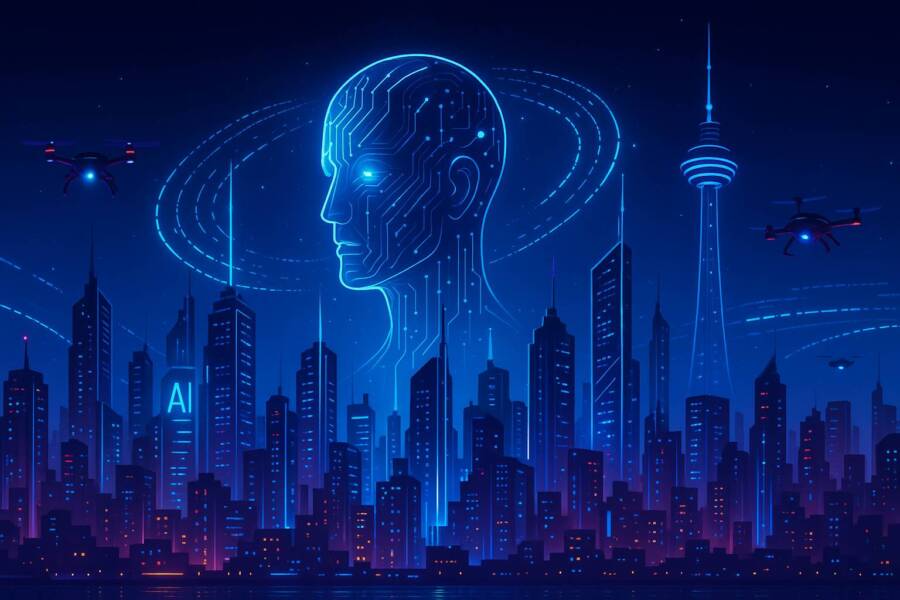
The pace of change is accelerating. Every year, technologies that once felt like science fiction become part of everyday life. So what’s next? Which innovations are set to shake up industries, redefine our lifestyles, and even shift how humanity lives on this planet—and beyond?
In this article, we’ll explore the top 10 emerging technologies that will shape the future in 2030 and beyond. From artificial intelligence to quantum computing, green technologies, and even space exploration, these breakthroughs are more than trends—they’re the building blocks of tomorrow.
1. Artificial Intelligence (AI): The Brain Behind the Future
Artificial Intelligence has already seeped into our daily routines—recommendations on Netflix, voice assistants like Siri and Alexa, or fraud detection on your banking app. But this is just the tip of the iceberg.
By 2030, AI will transform industries far beyond convenience apps. Doctors will use AI-driven diagnostics that outperform human specialists. Businesses will rely on intelligent automation that saves time and money. Artists and creators will collaborate with AI tools to generate music, films, and even virtual experiences that feel uncannily real.
One of the biggest shifts will be in the future of work. AI won’t just replace jobs—it will create new categories we can’t even imagine yet. Think “AI ethicists,” “algorithm trainers,” or “human-AI collaboration designers.”
Why it matters: AI is the central nervous system of future technology. It fuels everything from robotics to smart cities, and its ethical use will determine whether it becomes humanity’s best ally or greatest challenge.

2. Quantum Computing: Supercharged Problem Solving
Imagine a computer so powerful that it can solve problems in seconds that would take today’s fastest supercomputers thousands of years. That’s the promise of quantum computing.
Unlike classical computers, which process data in bits (0s and 1s), quantum computers use qubits, which can exist in multiple states at once. This opens the door to exponential processing power.
By 2030, quantum computing could:
-
Revolutionize drug discovery by simulating complex molecules.
-
Advance climate modeling, helping us predict and fight global warming.
-
Transform cybersecurity, creating unbreakable encryption (and, ironically, breaking current ones).
Right now, companies like IBM, Google, and startups such as Rigetti Computing are racing to make quantum power practical. While we’re still in the early stages, once the breakthrough arrives, it’ll be as disruptive as the invention of electricity.
Why it matters: Quantum computing won’t just make computers faster. It will change the rules of science, medicine, and innovation itself.
3. 5G and 6G Connectivity: A Hyperconnected World
If 4G brought us mobile video and ride-hailing apps, 5G is unlocking a new era of connectivity. Think ultra-fast downloads, seamless video calls, and networks that can handle billions of connected devices at once.
But by the time we get comfortable with 5G, 6G will already be on the horizon. Expected around 2030, 6G promises speeds up to 100 times faster than 5G and ultra-low latency that makes communication nearly instant.
This will power:
-
Smart cities, where traffic, energy, and infrastructure are managed in real-time.
-
Autonomous vehicles communicating instantly with each other.
-
Immersive AR/VR experiences, from holographic concerts to remote surgery.
Why it matters: The future isn’t just about faster internet. It’s about building a digital nervous system for the entire planet.

4. Blockchain Beyond Cryptocurrency
When most people hear “blockchain,” they think Bitcoin. But blockchain is much bigger than crypto speculation.
By 2030, blockchain will be the backbone of trust in the digital world. It can:
-
Securely manage digital identities.
-
Track and verify supply chains (from coffee beans to vaccines).
-
Enable transparent voting systems resistant to fraud.
-
Power smart contracts that execute automatically when conditions are met.
Banks, governments, and industries from healthcare to logistics are exploring blockchain not as a buzzword but as a serious infrastructure tool.
Why it matters: In a world drowning in misinformation, blockchain offers something priceless—verifiable truth.
5. Biotechnology & Healthcare Innovations
Healthcare is going through a digital and biological revolution. By 2030, biotechnology will reshape how we live, age, and heal.
Key innovations include:
-
CRISPR and gene editing: Correcting genetic disorders at their root.
-
Nanotechnology in medicine: Tiny robots that can deliver drugs directly to cells.
-
Personalized medicine: Tailored treatments based on your DNA.
-
AI doctors and diagnostics: Providing accessible care anywhere in the world.
Imagine a future where cancer is detected years before symptoms appear, or where wearable devices track not just steps but your real-time organ health.
Why it matters: The future of healthcare is proactive, personalized, and possibly longer-lasting. Humanity may not achieve immortality, but life expectancy and quality of life could soar.

6. Green & Sustainable Tech: Building a Better Planet
The climate crisis is the biggest challenge of our time—and technology is stepping up.
By 2030, green technology will reshape industries like energy, agriculture, and manufacturing. Examples include:
-
Renewable energy breakthroughs: Cheaper solar, offshore wind, fusion experiments.
-
Carbon capture technology: Pulling CO₂ directly from the air.
-
Smart agriculture: Vertical farms, precision irrigation, and lab-grown meat.
-
Circular economy tools: Recycling and reusing materials endlessly.
Governments and companies alike are investing billions into sustainable innovation. Why? Because eco-tech isn’t just about saving the planet—it’s the next trillion-dollar economy.
Why it matters: The technologies that save Earth will define the future of humanity.
7. Extended Reality (AR, VR, and the Metaverse)
Remember when video games were just pixels on a screen? The next decade will bring fully immersive worlds powered by Augmented Reality (AR) and Virtual Reality (VR).
The much-hyped “metaverse” may not yet be fully realized, but its building blocks are here:
-
AR glasses overlaying digital data onto the real world.
-
VR experiences for remote work, education, and healthcare.
-
Virtual concerts, sports, and social spaces that feel real.
By 2030, the lines between digital and physical reality will blur. You might attend school in VR, shop in AR-enhanced stores, or hang out with friends in a hybrid digital space.
Why it matters: Extended reality won’t just change entertainment—it’ll redefine how humans interact with each other.
8. Robotics & Automation: The New Workforce
Robots are no longer limited to assembly lines. By 2030, they’ll be cleaning homes, assisting surgeons, delivering packages, and even providing companionship.
Examples:
-
Collaborative robots (cobots) working alongside humans in factories.
-
Autonomous drones for delivery and disaster response.
-
AI-driven personal assistants beyond today’s voice-controlled devices.
Yes, some jobs will vanish—but new industries will rise. Just as the internet created millions of new careers, automation will spark innovation in ways we can’t fully predict.
Why it matters: Robots won’t replace humans; they’ll free us to focus on creativity, empathy, and strategy.
9. Space Technology & Interplanetary Innovation
Space isn’t just for astronauts anymore. By 2030, private companies like SpaceX, Blue Origin, and others will play as big a role as NASA.
Emerging space technologies include:
-
Reusable rockets making space travel affordable.
-
Lunar bases as stepping stones to Mars.
-
Asteroid mining for rare minerals.
-
Satellite megaconstellations bringing internet to remote regions.
It’s not just about exploration—it’s about turning space into the next economic frontier.
Why it matters: Humanity is becoming a multi-planetary species. The future economy may be written in the stars.
10. Human-Machine Interfaces: Blurring the Boundaries
One of the most exciting (and controversial) frontiers is direct human-machine connection.
By 2030, we may see:
-
Brain-computer interfaces (BCIs) that allow people to control devices with thought.
-
Neural implants that restore vision or movement.
-
Enhanced reality devices making humans more “cyborg-like.”
Companies like Neuralink are already experimenting with BCIs, and the potential is huge—from restoring mobility for paralyzed patients to augmenting human intelligence.
Why it matters: The line between human and machine is fading, raising incredible opportunities—and ethical dilemmas.
FAQs About Emerging Technologies
1. What are the top emerging technologies in 2030?
AI, quantum computing, blockchain, biotech, robotics, AR/VR, and sustainable tech are leading the way.
2. How will AI change everyday life?
AI will assist with healthcare, education, finance, and even creativity, making daily life more efficient and personalized.
3. Which industries will quantum computing disrupt?
Pharmaceuticals, finance, climate science, and cybersecurity will be transformed.
4. What role will blockchain play in the future?
Beyond crypto, blockchain will power secure digital identities, supply chains, and voting systems.
5. Will robots take over jobs?
Yes and no—some jobs will disappear, but automation will also create entirely new industries and opportunities.
Conclusion: The Future Is Already Knocking
The future isn’t something that’s “out there”—it’s unfolding right now. From AI that thinks to quantum computers that outpace imagination, from green technologies saving the planet to rockets carrying us to Mars, the next decade will reshape what it means to live, work, and dream.
The truth is, no one can predict exactly how these emerging technologies will play out. But one thing is clear: they’ll shape the future in ways that are as exciting as they are unpredictable.
So, here’s the big question: Which of these future technologies excites you the most—and which one scares you?
Drop your thoughts below. The future is waiting.

TechnologyHQ is a platform about business insights, tech, 4IR, digital transformation, AI, Blockchain, Cybersecurity, and social media for businesses.
We manage social media groups with more than 200,000 members with almost 100% engagement.