





















The New Currency of Trust
In today’s digital economy, trust is the foundation upon which every interaction depends. Whether transferring money, signing contracts, or verifying identity, trust determines the stability of relationships between individuals, organizations, and governments. Yet, in a world plagued by data breaches, fraudulent activities, and growing concerns about privacy, traditional trust systems are struggling to keep pace.
This is where blockchain technology emerges—not just as a tool for cryptocurrency but as a revolutionary framework for building trust in the digital age.
The Trust Problem in the Digital Age
The internet has transformed how we communicate, transact, and store information. But with this transformation comes a paradox: the more digitized our systems become, the more vulnerable they are to manipulation and fraud.
-
Cybercrime costs are expected to exceed $10 trillion annually by 2025.
-
Identity theft affects millions each year.
-
Centralized institutions—banks, corporations, and governments—remain single points of failure.
Traditional models of trust rely heavily on intermediaries: banks validate payments, notaries verify contracts, and governments maintain registries. While effective, these intermediaries can be slow, costly, and sometimes corruptible. Blockchain challenges this model by decentralizing trust itself.
What Is Blockchain? A Professional Overview
At its core, blockchain is a distributed ledger technology (DLT). It records transactions across a network of computers in a way that ensures data integrity, transparency, and security. Unlike traditional databases managed by a central authority, blockchain is decentralized and maintained by a consensus of participants.
Key characteristics include:
-
Transparency: Every participant sees the same version of the ledger.
-
Immutability: Once recorded, transactions cannot be altered or deleted.
-
Decentralization: No single authority controls the data.
-
Security: Transactions are cryptographically verified and resistant to tampering.
This combination makes blockchain an unparalleled tool for establishing trust without relying on intermediaries.
Tether Wallet: A Case Study in Trust and Blockchain
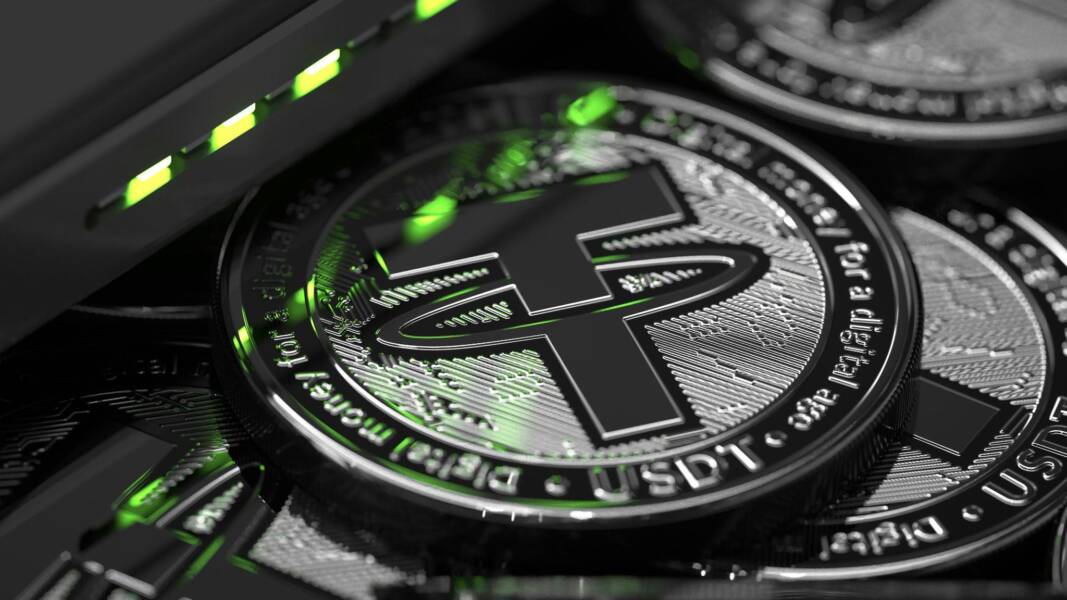
A compelling instance of blockchain’s capability to engender belief is seen in the use of a Tether Wallet. Tether, a stablecoin tied to the value of a fiat currency, gives a bridge among the conventional financial machine and the cryptocurrency internationally. Here’s why Tether Wallet sticks out:
- Stability: It gives a much less volatile choice for cryptocurrency buyers, being pegged to strong property like the US dollar.
- Transparency: Transactions are recorded on a blockchain, permitting users to verify transactions independently.
- Security: Utilizes blockchain’s inherent security functions to shield towards fraud and unauthorized get admission to.
How Blockchain Builds Trust in the Digital Age
Blockchain does not simply digitize existing trust models; it redefines them. It offers a trust framework built on mathematics and consensus rather than faith in institutions.
-
Transparency in Transactions
Every transaction on a blockchain is visible to all participants. This creates an environment of openness, where accountability is built into the system. -
Immutable Records
The permanence of blockchain data ensures historical accuracy. Fraud, manipulation, or retroactive tampering becomes nearly impossible. -
Decentralized Control
By distributing authority across a network, blockchain eliminates the single points of failure that often undermine centralized systems. -
Enhanced Security
Cryptographic validation and consensus mechanisms make unauthorized alterations extremely difficult, reinforcing digital integrity.
Blockchain Beyond Cryptocurrency
While blockchain rose to prominence as the technology behind Bitcoin, its applications extend far beyond digital currency. Today, industries worldwide are adopting blockchain to address pressing trust issues.
1. Financial Services
-
Smart contracts enable automated, self-executing agreements.
-
Cross-border payments become faster, cheaper, and more secure.
2. Supply Chain Management
-
Companies like Walmart use blockchain to trace food safety in seconds.
-
Consumers can verify product authenticity, reducing counterfeiting.
3. Healthcare
-
Secure patient records improve continuity of care.
-
Data integrity ensures medical histories remain accurate and tamper-proof.
4. Governance and Voting
-
Blockchain-based voting systems enhance transparency and reduce electoral fraud.
-
Public records, such as land registries, gain reliability through immutability.
5. Real Estate and Legal Sectors
-
Smart contracts streamline property transfers.
-
Title verification becomes efficient, reducing fraud and paperwork.
Real-World Examples of Blockchain Adoption
Several pioneering cases highlight blockchain’s role in building trust:
-
Walmart & IBM Food Trust: Reduced the time to trace food origins from days to seconds, enhancing consumer safety.
-
Estonia’s Digital Government: A blockchain-powered system secures healthcare, judicial, and legislative data for millions of citizens.
-
Ethereum Smart Contracts: Powering decentralized finance (DeFi), Ethereum has redefined financial trust by eliminating intermediaries.
These examples demonstrate blockchain’s role not as a theoretical concept but as a working infrastructure of trust.
Challenges to Widespread Blockchain Adoption
Despite its promise, blockchain is not without limitations. For it to become a universal foundation of trust, several challenges must be addressed:
-
Scalability – Current blockchain networks struggle with transaction volumes at global scale.
-
Energy Consumption – Proof-of-work models consume significant energy, though newer consensus mechanisms (e.g., proof-of-stake) show progress.
-
Regulatory Uncertainty – Global regulatory frameworks are inconsistent, creating uncertainty for businesses and investors.
-
User Adoption – Blockchain’s complexity and association with cryptocurrency hinder mainstream acceptance.
These obstacles, while significant, are gradually being resolved through innovation and collaboration.
The Rise of Blockchain in 2025 and Beyond
Looking ahead, blockchain is poised to underpin some of the most transformative shifts in technology and society:
-
Web3 and Decentralized Internet – Users reclaim ownership of data and digital identities.
-
Central Bank Digital Currencies (CBDCs) – Governments explore blockchain-backed currencies to modernize financial systems.
-
Decentralized Identity Solutions – Secure, portable, and verifiable digital IDs could replace fragmented login systems.
-
Next-Generation NFTs – Beyond art, NFTs may serve as digital tickets, certifications, or even healthcare documents.
As adoption grows, blockchain’s role as a trust infrastructure will become more pronounced across industries.
Why Blockchain Represents the Foundations of Trust
Unlike traditional systems that demand users “trust” institutions, blockchain offers a radical alternative: trust is no longer optional—it is embedded in the system itself.
The very design of blockchain guarantees that records are accurate, transparent, and permanent. This makes it not just a technology but a philosophical shift in how societies establish and maintain trust.
Photo by Shubham Dhage on Unsplash
Conclusion – A Transparent Future
Blockchain is more than a financial innovation. It is a structural evolution in how humans create, manage, and preserve trust. By providing transparency, immutability, and decentralization, it has already begun transforming industries from finance to healthcare.
As we look toward 2025 and beyond, blockchain stands as the foundation of digital trust, offering solutions to some of the most pressing challenges of our interconnected world.
In an era where trust is both fragile and essential, blockchain’s rise represents not hype, but a necessary evolution. The future of trust is transparent, decentralized, and secured by blockchain.

TechnologyHQ is a platform about business insights, tech, 4IR, digital transformation, AI, Blockchain, Cybersecurity, and social media for businesses.
We manage social media groups with more than 200,000 members with almost 100% engagement.