






















Ensuring strong SEO performance for large-scale websites requires advanced tactics, seamless coordination, and processes designed for scale. With massive content inventories, intricate site hierarchies, and an audience spanning multiple markets and demographics, businesses must adopt SEO strategies uniquely suited to these complexities. These organizations cannot afford to rely on basic SEO playbooks; instead, they must prioritize the efficiency, reliability, and adaptability of their approaches. Leveraging enterprise SEO services can be transformative for those determined to stake their claim at the top of search engine results. Partnering with experts who understand the unique challenges of enterprise-scale SEO ensures broader visibility and the ability to drive sustainable growth, outperform competitors, and capitalize on every search opportunity in today’s crowded digital landscape.
Whether managing tens of thousands of product listings for an e-commerce leader or overseeing a bustling editorial portal brimming with constantly updated articles, a strategic and forward-thinking approach is essential, managing such a sprawling digital asset requires more than routine fixes; it demands processes that are both scalable and proactive, enabling your team to take command of every layer of your site. This article shares actionable strategies to optimize the full scope of your large website for search engines and human visitors alike, maximizing operational efficiency, long-term scalability, and concrete, measurable impact for your business.
Optimizing Site Architecture
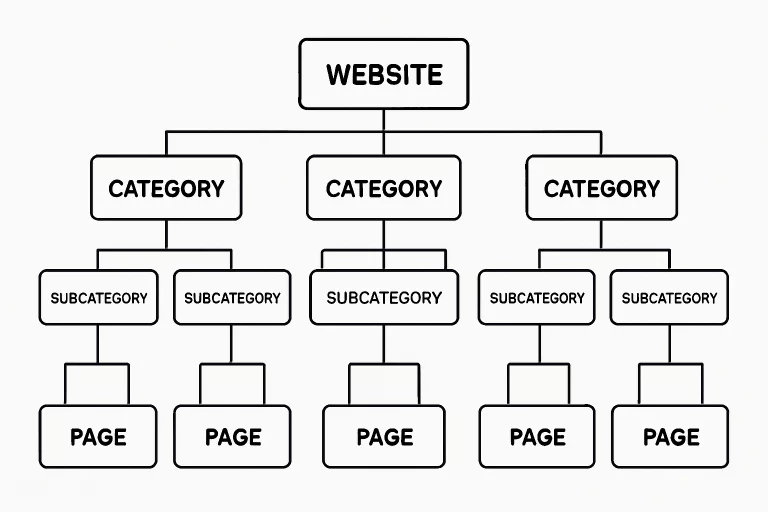
As large websites expand, site structure often grows more convoluted, posing challenges for search engines and users. Strong site architecture is foundational to SEO success at scale. A logically organized website makes it straightforward for search engines to crawl, understand, and prioritize your most vital content while paving clear pathways for users to find what they need. This dual focus reduces the occurrence of orphaned pages, minimizes wasted crawl budget, and drives higher user satisfaction.
- Logical URL Hierarchy:Build a URL structure that mirrors your primary content categories and subcategories, ensuring each URL is intuitive and descriptive. This organization helps both users and search bots quickly understand the relevance of each page and how it fits within your site’s larger context.
- Breadcrumb Navigation:Consistent breadcrumb trails guide users throughout your site, allowing them to backtrack or jump to parent categories easily. Breadcrumbs also enhance internal linking, passing page authority to key sections and helping search engines determine each page’s relationship within the hierarchy.
- Descriptive URLs:Keep URLs concise, meaningful, and keyword-rich while eliminating extraneous parameters that can cause confusion or create duplicate content issues. Clean URLs reinforce relevance signals for ranking while improving click-through rates from search results.
- Flat Architecture:Avoid deep nesting and excessive click depth. Instead, adopt a flat structure where the most valuable content can be accessed within three clicks from the homepage. This approach accelerates crawling and indexing and ensures users don’t drop off before finding what matters most.
For more in-depth insights and recommendations on building scalable site structures, check out SEO for Large Websites: Best Practices for Enterprises.
Leveraging Automation for SEO Scaling
Manual SEO optimization quickly becomes unmanageable as the scale of your website grows. Automation becomes valuable and essential to support rapid content updates, high publishing frequency, and the maintenance of thousands of URLs. Automation ensures that large-scale websites maintain quality, enforce best practices, and keep pace with changing market and search demands without burning through limited human resources.
- Dynamic XML Sitemaps:Automatically update your XML sitemaps in real time as new pages are published and outdated content is removed. This ensures search engines always have a current roadmap of your site and can swiftly index new or revised content.
- Bulk Structured Data Implementation:Use tools to implement schema markup at scale, tagging thousands of similar pages—such as product listings or articles—with the appropriate structured data. This guarantees consistent and comprehensive coverage, increasing eligibility for valuable search result features.
- AI-Powered Internal Linking:Advanced plugins and in-house automated scripts can create and maintain relevant internal links across your content. These contextual links support deeper crawling and provide stronger on-page signals to both users and search engines about related pages, boosting overall topic authority.
- Automated SEO Audits:Schedule automated scans for technical issues, broken links, or duplicate content, ensuring any problems are discovered and addressed before they escalate or impact performance.
For details on how real organizations manage SEO across multiple large sites, explore this How We Did It: Mastering Multi-Site SEO Case Study.
Addressing Technical SEO Challenges
Technical SEO forms the backbone of successful enterprise-level search strategies. Even award-winning content can struggle to gain traction if underlying technical issues remain unresolved. Technical SEO is about creating a frictionless foundation that allows browsers and search engines to access, interpret, and engage with your site as intended. When overlooked, technical pitfalls can reduce rankings, slow growth, and squander the reach of your most important pages.
- Website Speed:Optimize loading times by compressing images, leveraging modern formats, minifying code, and employing aggressive caching. Fast sites yield better UX and higher search visibility, given the importance of performance in Google’s algorithms.
- Mobile Friendliness:Ensure your design and functionality are fully responsive, providing seamless experiences across all devices. With mobile-first indexing, your site’s mobile performance increasingly dictates your overall SEO potential.
- Duplicate Content:Enforce canonical tags and develop strict editorial workflows to prevent duplicate URLs and thin content. Duplicate issues can confuse search engines, erode authority signals, and fragment your keyword targeting across unnecessary variants.
- Crawl Budget Optimization:Carefully configure your XML sitemaps and robots.txt files to prioritize critical content. Limit the exposure of low-value or irrelevant pages, ensuring search bots devote resources where they matter most.
Implementing Structured Data and Schema Markup
Structured data—implemented using schema markup—provides essential signals to search engines, enabling them to interpret, classify, and showcase your most valuable content in rich search features. For large organizations, deploying schema effectively can unlock enhanced listings in SERPs, setting your site apart with review stars, product data, events, FAQs, and much more.
- Apply Schema Markup:Use tchema.org elements to appropriately tag reviews, events, products, articles, or organization details. Matching schema to content types boosts eligibility for SERP enhancements.
- Enhance Listings:Rich results created by schema markup attract more attention and higher click-through rates by displaying ratings, pricing, images, and additional info directly in search results.
- Continuous Updating:Stay up to date with changing schema specifications and promptly roll out updates to align with new features or content categories, maintaining your competitive search advantages.
Monitoring and Analyzing SEO Performance
Operating a large-scale website is an ongoing process. Regular oversight and data-driven decision-making are vital to sustaining and expanding organic visibility. Continuous monitoring allows you to respond quickly to technical issues, content gaps, and shifts in user behavior, providing actionable insights to improve strategy.
- Crawl Errors:Use Google Search Console and similar tools to detect and swiftly resolve crawl errors, ensuring all valuable pages remain visible and accessible.
- Indexation Trends:Analyze coverage and indexation reports regularly to confirm your content is being crawled, indexed, and updated as intended, preventing hidden issues that might undermine discoverability.
- Organic Traffic:Track traffic growth patterns across key site segments, benchmarking against previous periods and competitive trends to identify strengths and weaknesses.
- Rankings:Monitor the ranking positions of your priority keywords and high-value pages. Promptly investigate significant shifts to mitigate risks and capitalize on emerging opportunities.
You can continually refine your approach and demonstrate the ROI delivered by tying your analytical insights directly to business KPIs.
Ultimately, adapting these strategies to your website’s distinct scope and requirements will ensure you scale efficiently while maintaining top-notch user experiences and steady organic growth. Relying on proven frameworks empowers modern enterprises to thrive in search, seize opportunities ahead of competitors, and build a dominant presence that stands the test of time.

TechnologyHQ is a platform about business insights, tech, 4IR, digital transformation, AI, Blockchain, Cybersecurity, and social media for businesses.
We manage social media groups with more than 200,000 members with almost 100% engagement.