














SpaceX AI debt financing has become a major development in the technology industry’s investment race after Elon Musk said on October 25, 2026, that the company had closed a $40 billion debt arrangement to purchase advanced graphics processing units.
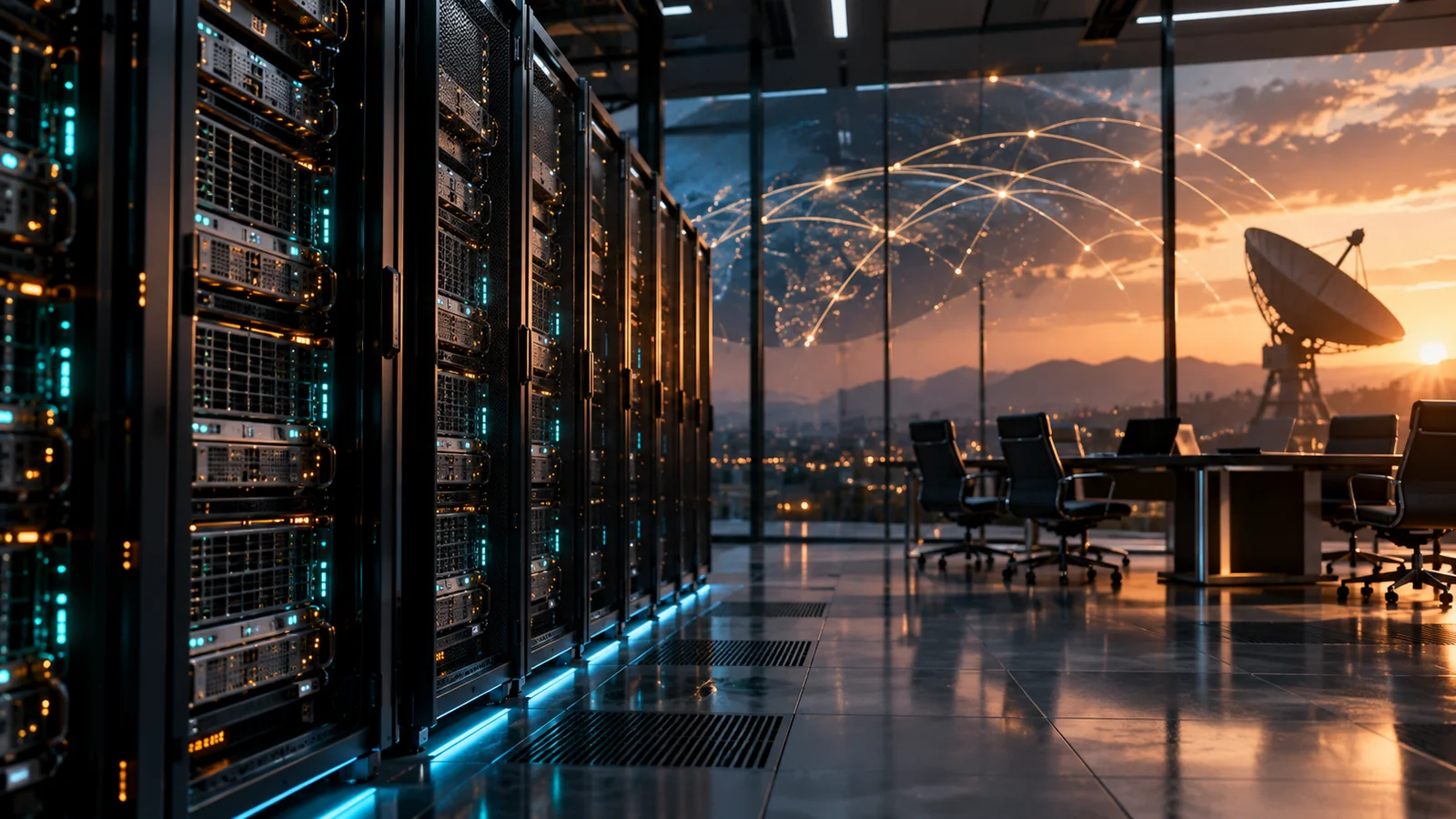
The announcement highlights the enormous financial commitments required to expand artificial intelligence infrastructure—and raises questions about which companies can sustainably finance that expansion.
According to Musk, the proposed borrowing will primarily support purchases of AI processors scheduled for delivery during the first half of 2027.
He attributed SpaceX’s ability to obtain financing to its investment-grade credit standing and revenue generated by businesses outside AI infrastructure, including satellite internet and rocket launches.
However, the precise financing terms remain unclear.
Reuters reported that Musk’s statement did not establish whether final pricing had been agreed or exactly what he meant by the financing being closed.
That uncertainty matters because a financing commitment, completed debt issuance, and fully funded borrowing can represent different stages of a transaction.
For business leaders, the announcement illustrates a broader challenge: the next phase of AI competition may depend as much on access to affordable capital and reliable cash flow as on technological capabilities. Reuters
What SpaceX Announced About Its $40 Billion Financing
On Sunday, October 25, Musk said SpaceX had completed arrangements for approximately $40 billion in debt financing intended to support purchases of advanced AI computing hardware.
The processors are expected to be supplied by Nvidia (official website), whose graphics processing units are widely used in AI training and inference infrastructure.
The financing follows reports earlier in October that SpaceX was negotiating with banks and asset managers to raise funds for large-scale processor purchases.
Those earlier discussions reportedly involved a combination of bank lending and institutional debt financing.
The October 25 announcement represents a significant development because Musk described the arrangement as closed.
Nevertheless, publicly available information does not yet provide a complete picture of the financing structure.
Important details—including final interest rates, repayment schedules, collateral arrangements, and the timing of any drawdowns—remain subject to clarification.
Why the structure matters
Not all debt financing creates the same financial obligations.
A conventional bond generally involves borrowing funds from investors under specified repayment and interest terms.
A bank loan may provide different repayment arrangements, financial covenants, and restrictions.
Asset-backed financing can involve borrowing against identifiable assets or associated cash flows.
Musk described the new arrangement as primarily callable debt.
Callable debt generally allows an issuer to repay borrowing before its scheduled maturity under specified conditions.
However, the precise rights, costs, and repayment provisions depend on the contractual terms.
Until those details become available, investors should avoid treating the $40 billion announcement as equivalent to an unrestricted cash payment already received by SpaceX.
Why AI Infrastructure Requires So Much Capital
Artificial intelligence infrastructure is expensive because advanced computing systems require far more than processors.
Companies developing large-scale AI services must invest in computing equipment, data centers, networking infrastructure, electricity supply, cooling systems, and specialized engineering.
The processors themselves can represent a substantial portion of the initial investment.
But purchasing them is only one stage of the process.
A company must also install the equipment, connect it to suitable infrastructure, maintain operational reliability, and attract customers willing to pay for computing services.
These requirements create significant upfront costs.
Revenue may increase gradually as new infrastructure becomes operational and customers begin using the available capacity.
This timing difference creates a financing challenge.
Companies frequently need to spend large amounts before the resulting infrastructure generates sufficient cash flow to support itself.
The difference between AI demand and AI profitability
Strong demand for computing power does not automatically guarantee attractive financial returns.
A provider might successfully sell access to its processors while facing substantial depreciation, financing, electricity, and maintenance expenses.
The business must generate enough revenue over the equipment’s useful life to cover those costs and provide an acceptable return.
This becomes more difficult when technology changes rapidly.
New generations of processors may offer improved performance or energy efficiency.
As a result, older equipment can become less competitive before its physical operating life ends.
Companies must therefore evaluate not only whether customers need computing power today, but also how long their investments are likely to remain commercially attractive.
SpaceX’s Financial Results Help Explain Its Strategy
The financing announcement follows a period of rapid financial expansion for SpaceX.
In its third-quarter results, released October 20, the company reported revenue of approximately $14.6 billion.
That represented an increase of 161% compared with the corresponding quarter in 2025.
SpaceX also reported operating income of approximately $2.8 billion and net income of $4.4 billion.
Its adjusted EBITDA reached $8.8 billion.
Adjusted EBITDA is a non-GAAP financial measure and should not be treated as equivalent to operating cash flow or net income.
The company attributed much of its growth to the expansion of its Super Intelligence business, which includes AI-related products and infrastructure services. SEC
SpaceX Q3 2026: Key Financial Figures
| Financial indicator | Q3 2026 |
|---|---|
| Total revenue | $14.575 billion |
| Year-over-year revenue growth | 161% |
| Operating income | $2.791 billion |
| Net income | Approximately $4.4 billion |
| Adjusted EBITDA | $8.809 billion |
| Capital expenditure | $19.593 billion |
| Super Intelligence revenue | $7.560 billion |
| Super Intelligence operating income | $431 million |
| Super Intelligence capital expenditure | $16.444 billion |
Source: SpaceX third-quarter 2026 financial disclosures filed with the U.S. Securities and Exchange Commission.
The figures reveal an important distinction.
SpaceX is generating substantial revenue from AI-related activities, but the investment required to expand those activities remains extremely high.
During the third quarter, capital expenditure exceeded total quarterly revenue.
This does not automatically indicate financial distress.
Capital expenditure represents investment in assets intended to support future operations, while revenue measures sales generated during the reporting period.
Nevertheless, the comparison illustrates the extraordinary scale of the company’s investment program.
SpaceX Is Becoming More Than a Rocket Company
Historically, SpaceX was primarily associated with launch services and satellite communications.
Those activities remain important.
However, its recent financial results show that artificial intelligence has become a major part of the business.
The company now reports three principal operating segments: Space, Connectivity, and Super Intelligence.
Space: Launch services and development
The Space segment generated approximately $1.77 billion in third-quarter revenue.
Its activities include launch services and spacecraft development.
Although the segment remains strategically important, it recorded a small operating loss during the quarter.
The company continues investing heavily in its Starship program and associated infrastructure.
Connectivity: Starlink’s financial contribution
The Connectivity segment generated approximately $5.25 billion in quarterly revenue.
Its activities include the Starlink satellite internet business and related services.
Connectivity produced approximately $2.37 billion in operating income during the quarter.
That profitability is particularly relevant to the financing announcement.
A business generating substantial operating earnings outside AI infrastructure can potentially provide additional support for corporate borrowing.
However, operating income is not identical to cash available for debt repayment.
Capital expenditure, working capital, taxes, and other obligations must also be considered.
Super Intelligence: Rapid growth and heavy investment
The Super Intelligence segment generated $7.56 billion in quarterly revenue.
That compared with approximately $813 million a year earlier.
The increase reflects the rapid expansion of SpaceX’s AI activities, including cloud infrastructure and related software products.
The segment also reported $431 million in operating income, reversing a substantial operating loss from the previous year.
However, it recorded approximately $16.44 billion in capital expenditure during the quarter.
That spending was more than twice the segment’s quarterly revenue.
The comparison illustrates why external financing remains strategically important even when a business is growing rapidly. SEC
The Most Important Financial Question Is Cash Flow
Revenue growth and accounting profitability are important, but capital-intensive businesses must also generate sufficient cash to finance operations and investment.
SpaceX’s financial statements provide useful context.
During the first nine months of 2026, the company generated approximately $13.1 billion in operating cash flow.
Over the same period, purchases of property, plant, and equipment totaled approximately $48.1 billion.
Subtracting those capital purchases from operating cash flow produces a simple cash-flow deficit of approximately $35 billion before other investing and financing activities.
This calculation is an analytical measure, not necessarily the company’s preferred definition of free cash flow.
It demonstrates that the company’s investment program substantially exceeded internally generated operating cash during the period.
SpaceX also received approximately $85.7 billion in net proceeds from its initial public offering.
Those proceeds contributed to its financial resources and helped support the company’s investment strategy.
At September 30, SpaceX reported approximately $51.3 billion in cash and cash equivalents, together with $38.6 billion in marketable securities.
The company therefore had substantial reported liquidity before the newly announced financing.
The existence of significant cash reserves does not eliminate the potential strategic advantages of borrowing.
Businesses may use debt to preserve liquidity, match financing to asset investment, or maintain flexibility for future projects.
But additional borrowing also creates financial obligations. SEC
Why Debt Financing Can Be Attractive
Debt allows companies to fund investment without immediately issuing additional shares.
For existing shareholders, that can help avoid ownership dilution.
Borrowing can also allow a company to match the cost of a long-term investment with revenue generated over several years.
For example, a business purchasing equipment expected to operate for five years might prefer financing that spreads payments across the period in which the equipment generates revenue.
However, the arrangement must account for interest costs and repayment obligations.
The cost of borrowing changes the economics
Consider a simplified illustration.
If a company borrowed $40 billion at an annual interest rate of 8%, the interest expense would be approximately $3.2 billion per year before considering principal repayments, fees, or other contractual terms.
This is a hypothetical calculation, not a confirmed estimate of SpaceX’s borrowing costs.
It assumes the entire amount is outstanding for a full year at a constant rate.
The actual expense would depend on the final financing structure.
The illustration nevertheless demonstrates why borrowing costs matter.
A relatively small difference in interest rates can produce hundreds of millions of dollars in additional annual expenses when financing reaches tens of billions.
Preliminary pricing suggests lenders are demanding compensation
Reporting by Semafor on October 22 indicated that parts of the proposed SpaceX financing were being discussed at interest rates of approximately 7.75% and 8.3%.
Those figures were preliminary indications based on people familiar with the discussions.
They were not confirmed final terms.
The report also indicated that financing conditions had become more demanding as investors reassessed risks associated with AI infrastructure.
The development suggests that even large technology companies may face higher borrowing costs when investors become more cautious.
However, comparisons between different debt instruments require care because maturity, collateral, repayment terms, and credit protections can affect pricing. Semafor
Why Musk Predicts Trouble for AI Cloud Providers
One of the most consequential parts of Musk’s October 25 comments concerned specialized AI cloud companies.
These businesses are sometimes called neoclouds.
Unlike diversified technology companies offering many different products and services, neocloud providers focus heavily on supplying computing infrastructure for AI workloads.
Their customers may include AI developers, enterprises, research organizations, and other technology companies.
Musk argued that debt markets have become substantially less accessible to businesses without significant revenue outside AI data centers.
He predicted that the industry would experience consolidation and business failures.
Those statements represent Musk’s assessment of market conditions, not a confirmed forecast.
He also said SpaceX did not intend to acquire struggling neocloud companies. Reuters
Why specialized providers may face greater financial pressure
A company heavily dependent on AI infrastructure revenue can face concentrated business risks.
If demand weakens, its revenue may decline while financing and operating obligations remain substantial.
If customers delay projects, the provider may have difficulty generating expected returns on newly installed equipment.
If borrowing costs increase, planned expansion may become less attractive.
And if newer processors offer substantially better economics, existing equipment may lose commercial value faster than expected.
These risks are not unique to AI.
They are common in capital-intensive industries where large investments must be made before future demand is fully known.
The distinguishing feature of AI infrastructure is the combination of rapid technological change and extraordinary investment scale.
Diversified Revenue Can Become a Competitive Advantage
SpaceX’s financing strategy highlights the potential value of having multiple revenue sources.
A company earning money from satellite communications, launch services, and AI infrastructure may have greater financial flexibility than a business dependent on one activity.
That flexibility can support investment during periods when financing conditions become less favorable.
However, diversification does not eliminate financial risk.
A diversified company can still overinvest, borrow excessively, or experience unexpected declines in demand.
The relevant question is whether its different businesses generate sufficient cash to support their own operations and the company’s broader financial commitments.
For SpaceX, the profitability of Connectivity is particularly important.
Its third-quarter results demonstrate that the segment contributes meaningful operating earnings.
Nevertheless, investors must consider the entire company’s capital requirements rather than evaluating individual segments in isolation.
The Risks Extend Beyond Borrowing Costs
Financial research organizations have identified several additional challenges associated with AI infrastructure financing.
S&P Global (official website) has highlighted the increasing complexity of AI-related debt across public and private markets.
Its August 2026 research noted that financing is being distributed through multiple structures, including corporate debt, private credit, and asset-backed arrangements.
This can make it difficult for investors to understand their total exposure.
Different financing vehicles may ultimately depend on demand from the same limited group of major technology customers.
Consequently, apparent diversification across financial instruments may conceal concentrated economic risks. S&P Global
Power availability can delay revenue generation
Moody’s (official website) has also examined the risks associated with financing data center construction.
Its research emphasizes that completing a physical data center does not necessarily mean the facility is ready to generate revenue.
Electricity supply, grid connections, and operational commissioning can create delays.
A company may therefore begin incurring financing costs before its infrastructure becomes commercially productive.
For lenders, this creates a potential mismatch between repayment obligations and expected cash generation.
For operators, it reinforces the importance of coordinating equipment purchases with infrastructure readiness. Moody’s
What This Means for AI Infrastructure Suppliers
The expansion of AI infrastructure creates substantial opportunities for companies supplying processors, networking equipment, power systems, cooling technology, and construction services.
However, suppliers should distinguish strong order demand from guaranteed long-term financial stability.
A customer planning a large infrastructure project may reduce or delay purchases if financing conditions deteriorate.
Companies supplying capital-intensive industries should therefore evaluate customer concentration, payment terms, and project execution risks.
For example, a supplier dependent on a small number of AI infrastructure customers could face significant revenue volatility if one customer postpones expansion.
Diversifying customers and maintaining disciplined credit policies can reduce that exposure.
The broader lesson is that participation in a rapidly growing industry does not eliminate the need for conventional financial risk management.
What Business Leaders Can Learn From SpaceX
The SpaceX AI debt financing announcement offers practical lessons for companies far smaller than the technology industry’s largest infrastructure investors.
1. Match financing to the life of an investment
Businesses should consider how long an asset will generate revenue before choosing a financing structure.
Short-term borrowing used to fund long-term equipment can create refinancing pressure.
Longer-term financing may provide greater stability, although it can involve different costs and restrictions.
2. Evaluate cash flow, not just revenue growth
Strong sales do not automatically mean that a business can finance expansion internally.
Management should understand the relationship between operating cash flow, capital expenditure, debt repayments, and available liquidity.
3. Stress-test borrowing costs
A project that appears profitable at one interest rate may become unattractive if financing costs rise.
Businesses should evaluate alternative borrowing scenarios before making major commitments.
4. Avoid excessive customer concentration
Companies dependent on a limited number of customers or industries may face greater financial volatility.
Diversification can improve resilience when demand changes.
5. Invest according to verified demand
Optimistic forecasts can justify expansion, but companies should also consider what happens if customer adoption is slower than expected.
Staged investment can sometimes reduce the risk of committing too much capital before demand becomes established.
These principles apply to manufacturers, logistics companies, software providers, retailers, and other businesses making significant investment decisions.
A Practical Framework for Evaluating Major Investments
Business leaders considering capital-intensive projects can use the following questions to evaluate financial sustainability.
| Evaluation area | Key question |
|---|---|
| Demand | Is there sufficient evidence that customers will pay for the new capacity? |
| Revenue quality | How much expected revenue is contracted, recurring, or dependent on forecasts? |
| Capital expenditure | What is the total cost of equipment, installation, infrastructure, and maintenance? |
| Financing | What are the borrowing costs, repayment obligations, and restrictions? |
| Cash flow | When is the investment expected to generate positive cash flow? |
| Technology risk | Could newer equipment make the investment less competitive? |
| Operational readiness | Are electricity, facilities, personnel, and suppliers available? |
| Downside protection | Can the business remain financially stable if demand is weaker than expected? |
This framework is particularly useful when businesses are evaluating technologies whose commercial economics are changing rapidly.
Why the AI Financing Debate Matters Beyond Technology
The financing of AI infrastructure is becoming an important issue for broader capital markets.
Large technology companies compete for funding alongside businesses in manufacturing, energy, transportation, and other industries.
When investment demand rises substantially, financing conditions can influence which projects proceed.
Lenders must evaluate whether expected returns justify the risks.
Investors must consider how much exposure they want to companies dependent on AI infrastructure expansion.
Corporate executives must decide whether the potential benefits of new technology justify the required financial commitments.
These decisions influence economic activity beyond the technology sector.
Data center construction can create demand for equipment, engineering, energy infrastructure, and specialized services.
However, excessive investment could also produce underutilized assets if future demand fails to meet expectations.
The challenge is to distinguish economically productive expansion from investment driven primarily by competitive pressure or optimistic forecasts.
What Happens Next?
Several developments will determine the significance of SpaceX’s latest financing announcement.
The first is confirmation of the final debt structure.
Investors will want information about interest rates, maturity dates, collateral, and repayment provisions.
The second is the timing of processor deliveries.
Musk indicated that the financing would primarily support equipment expected during the first two quarters of 2027.
The third is SpaceX’s future capital expenditure.
Chief Financial Officer Bret Johnsen has indicated that the company expects to spend approximately $35 billion to $40 billion during the fourth quarter of 2026.
That figure is a management forecast, not a completed expenditure.
The fourth is the performance of SpaceX’s AI business.
Revenue growth, operating profitability, equipment utilization, and cash generation will help determine whether its investment strategy produces sustainable financial returns.
Finally, developments in the broader AI cloud market will be important.
If financing becomes more difficult for specialized providers, the industry could experience changes in pricing, investment plans, and competitive structure.
However, consolidation and failures are possibilities, not inevitable outcomes.
The Bottom Line
SpaceX’s reported $40 billion AI financing arrangement illustrates how the artificial intelligence industry is entering a more financially demanding stage.
The initial competition to develop powerful AI systems has expanded into a race to secure processors, electricity, infrastructure, and long-term financing.
SpaceX’s rapidly growing AI revenue provides evidence of commercial demand.
But its enormous capital expenditure also demonstrates the scale of the financial commitments required.
Musk’s warning about specialized cloud providers reflects concerns that some companies may struggle to finance continued expansion.
Whether that prediction proves accurate will depend on borrowing conditions, customer demand, infrastructure utilization, and operating performance.
For business leaders, the central lesson is broader than artificial intelligence.
Rapid growth creates opportunities, but sustainable competitive advantage requires the financial capacity to support investment through changing market conditions.
The companies best positioned for the next phase of AI development may be those that combine technological innovation with disciplined capital allocation, reliable cash flow, and resilient business models.

Ingrid Maldine is a business writer, editor and management consultant with extensive experience writing and consulting for both start-ups and long established companies. She has ten years management and leadership experience gained at BSkyB in London and Viva Travel Guides in Quito, Ecuador, giving her a depth of insight into innovation in international business. With an MBA from the University of Hull and many years of experience running her own business consultancy, Ingrid’s background allows her to connect with a diverse range of clients, including cutting edge technology and web-based start-ups but also multinationals in need of assistance. Ingrid has played a defining role in shaping organizational strategy for a wide range of different organizations, including for-profit, NGOs and charities. Ingrid has also served on the Board of Directors for the South American Explorers Club in Quito, Ecuador.