





















Your cell phone just died. Now what?
You’re 14 miles into a national park, your phone’s at 1%, and—surprise—no bars. Google Maps is a ghost. The group you’re hiking with is somewhere between “ahead” and “totally lost.” You forgot your portable charger (because of course you did), and now you’re yelling into trees.
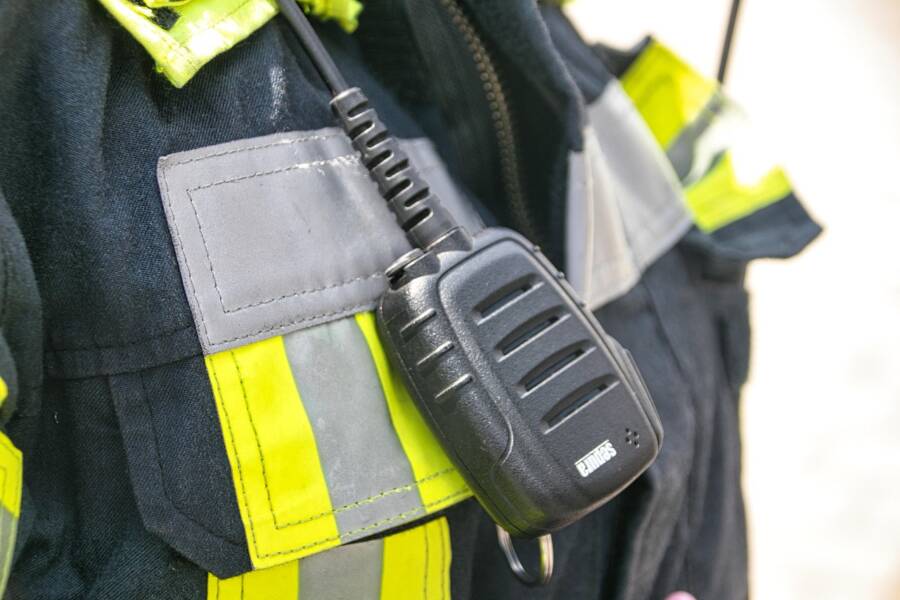
Now imagine clipping a walkie-talkie to your belt that still works. Yeah. That’s a different story.
Not Just for Security Guards or 8-Year-Olds
It’s easy to roll your eyes at the idea. Walkie-talkies? What is this, a summer camp in 1997?
But here’s the thing: walkie-talkies are having a moment. Quietly. Competently. Without the drama of notifications, dead zones, or data plans. They do one thing—and do it well.
Talk. Instantly. No apps, no towers, no panic.
The Mountains Don’t Care About Your Coverage
Let’s talk range. The kind that actually matters.
You’re hiking in the backcountry. Cell signal? Nonexistent. But that two-way radio clipped to your backpack? Still humming. Some models push 30+ miles in open areas. Try getting that out of your overpriced rectangle when you’re wedged between two ridgelines and a bad decision.
Weather alerts. Emergency channels. Rugged builds that don’t cry when they hit a rock. Walkie-talkies were built for the dirt, not the ‘gram.
Emergency? You’ll Wish You Had One
When the grid goes down, cell service follows. Every. Time.
Wildfire. Earthquake. Hurricane. Power outage. Take your pick. When cell towers are overloaded or fried, a walkie-talkie keeps the conversation going. First responders rely on them for a reason. (And not just because they look cooler saying “10-4.”)
Fun fact: FEMA recommends including a two-way radio in your emergency kit. That’s not tech nostalgia—it’s risk mitigation.
And unlike your smartphone, a walkie-talkie doesn’t care if there’s Wi-Fi. It just works.
The Secret Weapon of Urban Chaos
“But I live in a city!” Cool. Ever try running a music festival with iPhones?
Security teams, construction crews, event planners—walkie-talkies are everywhere once you start looking. Why? Because there’s no app that can match the speed of push-to-talk. No signal drop mid-sentence. No typing thumbs.
Also: no monthly bill. Drop one on concrete, it lives. Do the same to your phone and… condolences.
Let’s Stack the Deck
Walkie-Talkie vs. Cell Phone
| Feature | Walkie-Talkie | Cell Phone |
| Infrastructure Needed | None | Cell/data/Wi-Fi required |
| Speed of Use | Push button = talk | Open app, dial, wait |
| Group Chat | Real-time broadcast | Group text roulette |
| Battery Life | 12–24 hours+ | Maybe 6? If you’re lucky |
| Cost | One-time purchase | Monthly payments forever |
Not Either/Or—But It Could Be
Let’s not pretend a walkie-talkie is going to replace your phone’s camera, Spotify playlist, or group chat where you argue over dinner plans. It’s not that. It’s not trying to be.
But in a blackout? A snowstorm? A remote trail?
It’s the tool your phone wishes it could be.
And if the last five years have taught us anything, it’s this: having a backup isn’t paranoid. It’s smart.

TechnologyHQ is a platform about business insights, tech, 4IR, digital transformation, AI, Blockchain, Cybersecurity, and social media for businesses.
We manage social media groups with more than 200,000 members with almost 100% engagement.