




















Cancer research is moving faster than ever.
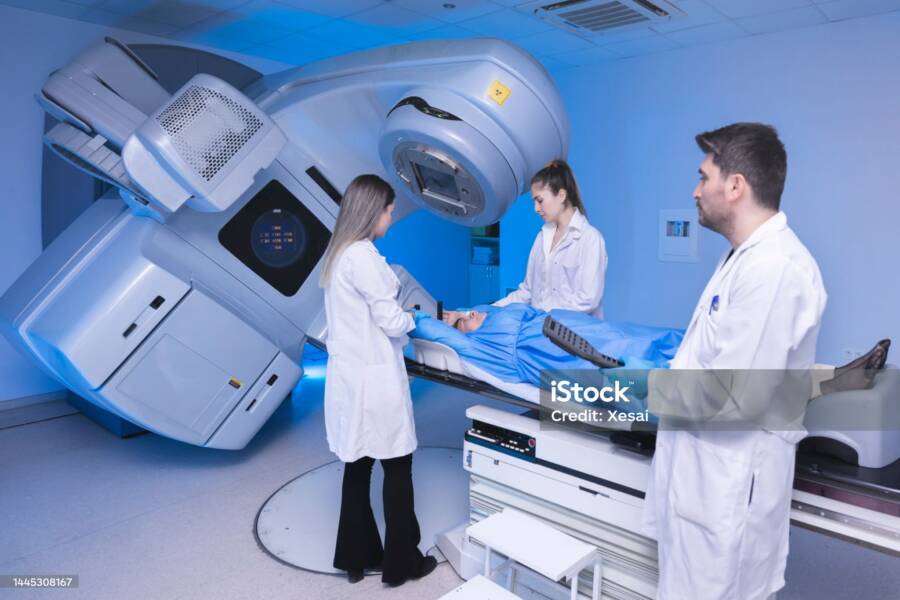
A few years ago, technologies such as artificial intelligence, personalized cancer vaccines, liquid biopsies and treatments designed around a tumor’s genetic mutations sounded almost futuristic. In 2026, many of these technologies are already being tested in hospitals, incorporated into cancer care or moving through advanced clinical trials.
That does not mean that scientists have found a single “cure for cancer.” Cancer is actually hundreds of different diseases, and what works for one type may not work for another.
But the way doctors prevent, detect, monitor and treat cancer is changing dramatically.
Researchers are increasingly moving away from a one-size-fits-all approach. Instead, they are using genetics, molecular testing, immune-system engineering and artificial intelligence to understand each tumor in much greater detail.
Here are some of the most important cancer breakthroughs of 2026 and the technologies that could reshape cancer care over the coming years.
1. Liquid Biopsies Are Making Cancer Detection Less Invasive
One of the most exciting areas of cancer technology is the liquid biopsy.
Traditional biopsies usually require doctors to remove a piece of tumor tissue. Although tissue biopsies remain extremely important, researchers can now obtain valuable information about some cancers simply by analyzing blood or other body fluids.
Cancer cells can release tiny fragments of DNA into the bloodstream. Scientists call this circulating tumor DNA, or ctDNA.
Modern sequencing technologies are becoming increasingly capable of identifying these signals.
Liquid biopsies can potentially help doctors:
- identify genetic mutations in a tumor;
- select targeted treatments;
- monitor how well treatment is working;
- detect emerging drug resistance;
- look for minimal residual disease after treatment;
- and, eventually, help detect certain cancers earlier.
A major 2026 scientific review described increasingly sophisticated approaches that combine several biological signals rather than relying on a single marker. These “multi-omic” techniques may improve the sensitivity of future liquid biopsies.
Researchers are also exploring liquid biopsies as a way to monitor the interaction between tumors and the immune system without repeatedly performing invasive tissue biopsies.
For patients, the appeal is obvious: a blood sample is considerably easier to collect repeatedly than tumor tissue.
However, liquid biopsy does not replace conventional biopsy in every situation. Its accuracy varies according to cancer type, stage and the amount of tumor material circulating in the blood.
2. One Blood Test Could Eventually Look for Several Cancers
An even more ambitious application of liquid-biopsy technology is the multi-cancer detection test, often abbreviated MCD.
Instead of looking for just one cancer, scientists are developing blood tests designed to recognize biological signals associated with several different cancers at the same time.
The idea is powerful.
Imagine going for a routine blood test and having that sample analyzed for molecular warning signs associated with cancers that currently have no routine screening program.
Research is progressing quickly, but there is an important reality check.
As of 2026, the US National Cancer Institute states that no multi-cancer detection test has been authorized by the FDA for routine cancer screening, and researchers still need randomized trials to determine whether these tests actually reduce cancer deaths.
The NCI has therefore launched major research efforts to evaluate the technology properly. Its Vanguard Study was designed to enroll up to 24,000 participants and help prepare for a much larger randomized trial.
So MCD testing is one of the technologies to watch closely—but it should not currently be viewed as a replacement for established screening methods such as mammography, cervical screening or colonoscopy when those tests are recommended.
3. Blood-Based Colorectal Cancer Screening Has Already Arrived
While multi-cancer blood screening is still being evaluated, blood-based screening for a specific cancer has already made an important step forward.
In 2024, the FDA approved Shield, a blood test intended for colorectal cancer screening in adults aged 45 and older who are at average risk.
The test searches for cancer-related genetic and epigenetic signals circulating in the blood.
This development matters because one of the biggest challenges in cancer prevention is not necessarily inventing another test—it is getting people to complete screening.
Colonoscopies and stool-based tests are effective options, but some people avoid or postpone them. A simple blood draw could potentially encourage more eligible people to participate in colorectal cancer screening.
It is important to understand the limitation, though: a blood screening test is not automatically a replacement for colonoscopy. An abnormal result can still require additional diagnostic procedures.
The bigger trend is clear: cancer screening is becoming more molecular, accessible and personalized.
4. Personalized mRNA Cancer Vaccines Are Reaching a Critical Stage
Perhaps one of the most fascinating cancer breakthroughs involves a technology most people now recognize: mRNA.
Cancer vaccines work differently from traditional vaccines against infections.
A preventive vaccine, such as the HPV vaccine, protects against infections that can eventually lead to cancer. A therapeutic cancer vaccine, on the other hand, attempts to teach a patient’s immune system to recognize and attack cancer cells that already exist.
The newest approach can be highly personalized.
Scientists sequence a patient’s tumor, identify unique mutations and predict abnormal proteins—known as neoantigens—that could make good immune-system targets.
A vaccine can then be produced specifically for that patient’s cancer.
Advances in genetic sequencing, computational neoantigen prediction and mRNA delivery have dramatically accelerated this field.
One particularly important development arrived in August 2026. Nature reported positive results announced from a large phase III trial involving more than 1,100 participants with melanoma, in which a personalized mRNA cancer vaccine was studied alongside immunotherapy. The full implications still require careful scientific and regulatory evaluation, but the late-stage result marked an important milestone for personalized cancer vaccines.
The long-term goal is remarkable: instead of giving every patient exactly the same drug, part of the treatment could be manufactured according to the molecular fingerprint of an individual’s tumor.
5. Immunotherapy Is Becoming More Precise
Immunotherapy has already transformed the treatment of several cancers.
Drugs called immune checkpoint inhibitors, including therapies that target proteins such as PD-1, remove some of the biological “brakes” that prevent immune cells from attacking cancer.
But checkpoint inhibitors do not work for everyone.
The next generation of immunotherapy is therefore becoming much more sophisticated.
Researchers are investigating combinations of checkpoint inhibitors with vaccines, targeted therapies and other immune-based treatments.
Another rapidly developing field involves bispecific antibodies.
These engineered antibodies can attach to two different targets at once. Some essentially act as molecular bridges, bringing immune cells close enough to cancer cells to attack them.
The FDA, for example, granted accelerated approval in 2025 to linvoseltamab, a bispecific antibody that targets BCMA on multiple-myeloma cells and CD3 on T cells.
Meanwhile, cell therapies such as CAR-T therapy continue to evolve. In these treatments, a patient’s immune cells are collected and genetically modified so they can recognize specific cancer targets.
Most successful CAR-T therapies have so far been used against blood cancers, but researchers continue trying to make engineered immune cells work effectively against solid tumors as well.
6. Antibody-Drug Conjugates Are Delivering Treatment More Precisely
Traditional chemotherapy can be effective because it attacks rapidly dividing cells.
The downside is that healthy rapidly dividing cells can also be affected.
Scientists are therefore developing treatments capable of delivering powerful cancer-killing drugs more selectively.
One important technology is the antibody-drug conjugate, or ADC.
Think of an ADC as a guided delivery system.
The antibody is designed to recognize a particular protein on cancer cells. Attached to that antibody is a potent anti-cancer payload. The goal is to transport the drug directly toward cells expressing the target.
ADCs have become an increasingly important part of modern oncology, particularly in breast and lung cancers.
FDA oncology approvals in 2025 and 2026 included several ADC-based therapies or new indications for existing ADCs, illustrating how rapidly this treatment class is expanding.
The technology is not side-effect-free, and targeting is not perfect. But it represents a fundamental shift toward more selective drug delivery rather than simply increasing chemotherapy intensity.
7. Precision Oncology Is Attacking Cancer by Mutation, Not Just Location
For decades, cancers were primarily classified according to the organ where they appeared: breast cancer, lung cancer, pancreatic cancer and so on.
That is still important, but modern oncology adds another layer:
What genetic abnormalities are driving the tumor?
Two cancers developing in different people—or even different organs—can contain molecular alterations that make them susceptible to a particular targeted drug.
Genomic sequencing can help reveal those vulnerabilities.
This approach is known as precision oncology.
Recent FDA approvals illustrate how detailed molecular classification is becoming. In September 2026, for example, the FDA granted accelerated approval to sevabertinib for certain advanced non-small-cell lung cancers carrying specific activating HER2 mutations. The same month, an approval involving camizestrant targeted breast cancers in which an ESR1 mutation was detected during treatment.
The message is increasingly clear: knowing that someone has “lung cancer” or “breast cancer” may no longer provide enough information.
Doctors increasingly want to know the tumor’s molecular identity as well.
8. Radioligand Therapy Is Turning Radiation Into a Targeted Weapon
Radiotherapy has been used against cancer for more than a century.
But modern nuclear medicine is finding ways to deliver radiation much more selectively.
Radioligand therapy combines a molecule capable of recognizing a cancer-related target with a radioactive isotope.
Once administered, the molecule travels through the body and binds preferentially to cells carrying that target, delivering radiation directly to them.
One well-known example involves PSMA-positive prostate cancer.
In July 2026, the FDA expanded the use of lutetium Lu 177 vipivotide tetraxetan—known commercially as Pluvicto—in combination with androgen-receptor pathway therapy for certain patients with metastatic PSMA-positive prostate cancer.
This combination of molecular targeting and nuclear medicine demonstrates how technologies from very different scientific disciplines are converging in modern cancer treatment.
9. Artificial Intelligence Is Becoming Part of Cancer Research and Diagnosis
Artificial intelligence is another technology changing oncology at several levels.
AI systems can analyze enormous quantities of information, including:
- medical images;
- digital pathology slides;
- genetic sequences;
- electronic health records;
- laboratory results;
- and scientific publications.
In radiology and pathology, AI can help identify patterns that might be difficult or time-consuming for humans to quantify manually.
Researchers are also studying more advanced AI agents capable of coordinating complicated research and clinical workflows rather than performing only a single classification task. A 2026 review in Nature Reviews Cancer highlighted how rapidly these systems are developing across oncology and cancer research.
AI is unlikely to simply “replace the oncologist.”
A more realistic future is one in which physicians use AI as another analytical tool—combining computational pattern recognition with medical expertise, patient history, pathology and clinical judgment.
Prevention May Still Be the Most Powerful Cancer Technology
New treatments understandably receive enormous attention, but preventing cancer remains one of the most powerful strategies available.
Vaccination against cancer-causing viruses has already demonstrated that some cancers can be prevented before they begin.
HPV vaccination can prevent infections responsible for most cervical cancers and several other cancers. Hepatitis B vaccination can reduce the risk associated with chronic hepatitis B infection and liver cancer.
At the same time, genomic risk assessment, improved screening and molecular testing could gradually make prevention more personalized.
In other words, the future of oncology is not just about developing better treatments.
It is increasingly about answering three questions earlier:
Who is at risk?
Can we detect the disease before symptoms appear?
Can we intervene before cancer becomes difficult to treat?
What Could Cancer Care Look Like in the Next Few Years?
The most important transformation may not come from one spectacular invention.
Instead, several technologies are beginning to work together.
A future patient might undergo genetic risk assessment and personalized screening. A suspicious signal could be detected through imaging or a blood test. AI might help analyze the results. Sequencing could identify the tumor’s mutations, while a liquid biopsy could monitor those mutations over time.
Treatment could then combine targeted drugs, immunotherapy, an antibody-drug conjugate, radioligand therapy or even a personalized vaccine depending on the cancer’s biological characteristics.
And doctors could adjust treatment as the tumor evolves.
That is the central direction of modern oncology:
finding cancer earlier, understanding it more precisely and attacking it more selectively.
The Bottom Line
The biggest cancer breakthroughs of 2026 show just how quickly oncology is changing.
Liquid biopsies are making molecular monitoring easier. Artificial intelligence is helping researchers and clinicians analyze increasingly complex data. Personalized cancer vaccines are reaching advanced clinical trials. Immunotherapies are becoming more sophisticated, while antibody-drug conjugates, radioligands and mutation-specific treatments are giving doctors increasingly precise ways to target cancer.
Some of these technologies are already available. Others remain experimental and may take years of clinical testing before their true benefits and limitations are known.
That distinction matters. Promising research does not automatically mean a treatment has been proven safe and effective or is appropriate for every patient.
But the direction is unmistakable.
The future of cancer care is becoming earlier, smarter, more personalized and increasingly precise—and some of the technologies that once belonged to science fiction are beginning to become part of real-world medicine.
This article is for educational purposes and does not replace professional medical advice, cancer screening recommendations or treatment decisions made with a qualified healthcare professional.

TechnologyHQ is a platform about business insights, tech, 4IR, digital transformation, AI, Blockchain, Cybersecurity, and social media for businesses.
We manage social media groups with more than 200,000 members with almost 100% engagement.