















Food recalls have become increasingly visible over the past decade, reminding consumers that even trusted brands can encounter unexpected safety issues. Whether caused by contamination, manufacturing errors, undeclared allergens, or packaging defects, recalls can affect thousands of families while costing companies millions of dollars.
The recent PT Organic Fruit Pouch recall has once again highlighted the importance of strong food safety systems. Although recalls demonstrate that regulatory oversight is working, they also raise an important question:
Could better technology prevent these incidents before products ever reach store shelves?
Today, the answer is increasingly yes.
From artificial intelligence and real-time sensors to blockchain traceability and predictive analytics, food manufacturers now have access to technologies capable of identifying problems much earlier than traditional quality control methods. These innovations don’t simply react to contamination—they help prevent it.
In this article, we’ll explore how modern food safety technology works, why the PT Organic Fruit Pouch recall matters, and how digital innovation is transforming the future of food production.
Understanding the PT Organic Fruit Pouch Recall
The PT Organic Fruit Pouch recall drew significant public attention because fruit pouches are widely consumed by infants and young children, making food safety especially critical.
Whenever products intended for children are recalled, consumer confidence is understandably shaken. Parents expect baby and toddler foods to meet exceptionally high safety standards, and manufacturers recognize that even a small quality issue can have serious consequences.
While every recall has its own unique circumstances, one consistent lesson emerges:
Early detection is always better than reacting after products reach consumers.
That’s where technology is rapidly changing the industry.
Why Food Safety Is More Complex Than Ever
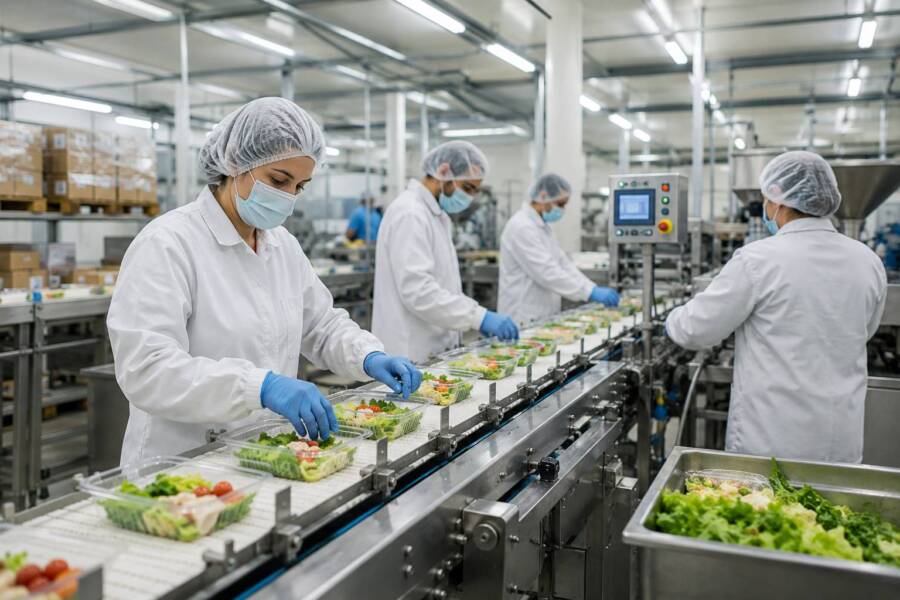
Modern food manufacturing involves an enormous network of suppliers, processors, transportation companies, warehouses, and retailers.
A single fruit pouch may contain ingredients sourced from several countries before being processed, packaged, and distributed nationwide.
Every additional step introduces potential risks, including:
- Raw ingredient contamination
- Temperature fluctuations during transport
- Equipment failures
- Packaging defects
- Cross-contamination
- Labeling mistakes
- Human error
Traditional inspections remain essential, but manual checks alone cannot monitor every stage continuously.
Technology fills these gaps by providing constant visibility across the supply chain.
AI Is Becoming a Powerful Food Safety Tool
Artificial intelligence is transforming quality assurance.
Instead of relying only on scheduled inspections, AI continuously analyzes production data to identify unusual patterns that humans might miss.
For example, AI systems can monitor:
- Production temperatures
- Mixing times
- Ingredient ratios
- Equipment performance
- Cleaning schedules
- Laboratory test results
If an abnormal pattern appears, the system immediately alerts operators before unsafe products continue through production.
This proactive approach dramatically reduces the chance that contaminated products leave the factory.
Smart Sensors Monitor Products Around the Clock
One of the biggest advancements in food manufacturing is the use of Internet of Things (IoT) sensors.
These small connected devices constantly monitor conditions such as:
- Temperature
- Humidity
- Air quality
- Storage conditions
- Refrigeration performance
- Transportation environments
Instead of discovering problems days later, manufacturers receive alerts in real time.
For refrigerated products especially, this continuous monitoring can prevent spoilage before products ever reach consumers.
Digital Traceability Makes Recalls Faster and More Accurate
One major challenge during any food recall is identifying exactly which products are affected.
Without digital traceability, companies may need to recall much larger batches than necessary because determining the exact source of the problem takes time.
Modern traceability systems record every step of production, including:
- Ingredient suppliers
- Batch numbers
- Processing dates
- Production lines
- Packaging facilities
- Shipping destinations
If contamination is detected, manufacturers can isolate only the affected lots rather than recalling every product.
This minimizes waste while protecting consumers.
Blockchain Is Building Consumer Trust
Blockchain technology has become an increasingly valuable tool for food transparency.
Every transaction in the supply chain creates a secure, time-stamped record that cannot easily be altered.
Consumers, retailers, and regulators gain greater confidence because product histories become much easier to verify.
Although blockchain is not a replacement for food safety testing, it strengthens accountability across the entire supply chain.
Machine Vision Detects Problems Humans Miss
Computer vision systems now inspect thousands of products every minute.
High-speed cameras combined with AI can identify:
- Damaged packaging
- Incorrect labels
- Seal failures
- Foreign materials
- Color abnormalities
- Fill-level inconsistencies
Unlike manual inspections, machine vision never gets tired or distracted.
This significantly improves quality control while reducing production errors.
Predictive Maintenance Prevents Equipment Failures
Manufacturing equipment naturally wears down over time.
Small mechanical issues can eventually contribute to contamination risks or production failures.
Predictive maintenance systems continuously monitor:
- Motor vibration
- Temperature
- Pressure
- Power consumption
- Mechanical performance
Instead of waiting for equipment to fail, manufacturers schedule maintenance before problems occur.
This reduces downtime while improving food safety.
Cloud-Based Quality Management Improves Collaboration
Today’s food companies often operate multiple production facilities.
Cloud-based quality management systems allow every location to share safety information instantly.
Benefits include:
- Faster corrective actions
- Centralized documentation
- Automatic compliance reporting
- Real-time audit preparation
- Improved communication across facilities
This creates a more consistent food safety culture throughout the organization.
How Consumers Benefit
Technology isn’t only helping manufacturers.
Consumers also gain important advantages:
Greater transparency
Many brands now provide QR codes that reveal sourcing and production information.
Faster recalls
Digital systems allow companies to identify affected products more quickly.
Improved food quality
Continuous monitoring reduces manufacturing inconsistencies.
Increased confidence
Knowing products are monitored throughout production helps build consumer trust.
Technology Doesn’t Replace Good Manufacturing Practices
Despite impressive technological advances, food safety still depends on people.
Technology works best when combined with:
- Employee training
- Good hygiene
- Strong supplier verification
- Regular inspections
- Laboratory testing
- Regulatory compliance
Digital tools enhance these practices—they do not replace them.
Successful food safety programs integrate both human expertise and advanced technology.
The Future of Food Safety
Innovation continues to accelerate.
Emerging technologies likely to shape the next decade include:
Digital Twins
Virtual production models capable of predicting manufacturing risks before they occur.
AI-Powered Predictive Analytics
Algorithms that anticipate contamination risks based on historical production data.
Smart Packaging
Packages capable of indicating spoilage, temperature abuse, or freshness changes.
Autonomous Inspection Robots
Robots equipped with sensors that inspect production environments continuously.
Advanced Genomic Testing
Faster identification of bacteria and pathogens than traditional laboratory methods.
Together, these innovations promise even greater protection for consumers.
Lessons from the PT Organic Fruit Pouch Recall
The PT Organic Fruit Pouch recall reminds us that no food system is completely immune to unexpected challenges.
However, it also demonstrates why investment in food safety technology is becoming increasingly important.
By combining AI, smart sensors, blockchain, machine vision, predictive maintenance, and digital traceability, manufacturers can detect issues earlier, respond more quickly, and reduce the likelihood of future recalls.
As food supply chains become more global and complex, technology will play an even greater role in protecting public health.
For consumers, that means safer products and greater confidence in the foods they purchase every day.
Frequently Asked Questions
What is food safety technology?
Food safety technology includes digital tools such as artificial intelligence, IoT sensors, blockchain, machine vision, and traceability systems that help detect, prevent, and manage food safety risks throughout production and distribution.
How can technology reduce food recalls?
Technology enables manufacturers to monitor production in real time, identify abnormalities early, improve traceability, and isolate affected batches quickly, reducing both the likelihood and scale of recalls.
Why is traceability important during a recall?
Traceability helps companies identify exactly where ingredients came from, which batches are affected, and where products were distributed. This allows for faster, more targeted recalls.
Can AI detect food contamination?
AI can identify production anomalies and patterns associated with contamination risks. While it complements laboratory testing, it does not replace microbiological analysis or regulatory inspections.
What can consumers do during a food recall?
Consumers should stop using the affected product, follow the manufacturer’s recall instructions, check lot numbers and expiration dates, and monitor updates from the appropriate food safety authorities.

TechnologyHQ is a platform about business insights, tech, 4IR, digital transformation, AI, Blockchain, Cybersecurity, and social media for businesses.
We manage social media groups with more than 200,000 members with almost 100% engagement.