




















Homelessness remains one of the world’s most complex social challenges. Every year, thousands of people lose stable housing due to financial hardship, health issues, unemployment, family crises, or unexpected emergencies. While government and charities continue working to provide emergency assistance, many experts believe that long-term solutions require something more ambitious: combining sustainability, technology, and human-centered policies.
The case of Joseph Williams in Nashville has drawn attention to the broader conversation about homelessness, highlighting how individual stories can reveal systemic challenges. While every person’s circumstances are unique, stories like Williams’ remind us that homelessness is rarely the result of a single event. Instead, it often emerges from a combination of economic, social, and personal factors.
As cities around the world embrace smart technologies and sustainable development, new opportunities are emerging to rethink how communities support vulnerable populations. Could green construction, artificial intelligence, renewable energy, and digital services become part of the solution?
Let’s explore some of the most promising innovations that could reshape the future of homelessness.
Why Traditional Solutions Aren’t Enough
Emergency shelters remain essential, especially during extreme weather conditions. However, they often provide only temporary relief rather than addressing the underlying causes of homelessness.
Many people experiencing homelessness face challenges such as:
- Limited access to affordable housing
- Mental health support needs
- Substance use disorders
- Difficulty finding employment
- Lack of identification documents
- Limited access to healthcare
- Transportation barriers
Because these issues are interconnected, experts increasingly emphasize coordinated, long-term strategies rather than relying solely on emergency services.
Sustainable Tiny Homes Could Provide Immediate Stability
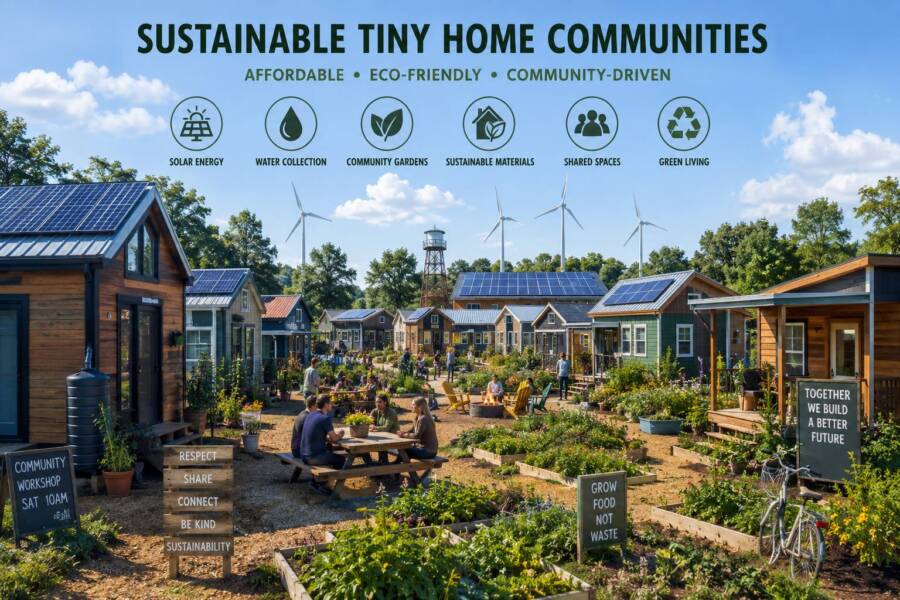
One of the fastest-growing ideas worldwide is the construction of sustainable tiny home communities.
Unlike traditional shelters, tiny homes provide residents with privacy, security, and personal space while remaining significantly more affordable than conventional housing.
Modern tiny homes can include:
- Solar panels
- Rainwater collection systems
- High-efficiency insulation
- Composting or low-water toilets
- Smart energy management
- Modular construction that reduces waste
These environmentally friendly communities can be built more quickly and at lower cost than many traditional housing developments, making them an attractive option for cities facing housing shortages.
Renewable Energy Can Reduce Housing Costs
Affordable housing isn’t just about construction costs—it also involves monthly utility bills.
Solar energy, battery storage, LED lighting, and highly efficient appliances can significantly reduce operating expenses for housing developments.
These savings can help nonprofit organizations and municipalities stretch limited budgets while keeping housing affordable for residents.
As renewable energy technologies become more accessible, sustainable housing projects are becoming increasingly practical across many regions.
Artificial Intelligence Could Help Prevent Homelessness
Artificial intelligence is often associated with automation, but it also has the potential to improve social services.
AI systems can help identify households at higher risk of housing instability by analyzing factors such as:
- Eviction filings
- Missed rent payments
- Utility shutoff notices
- Employment disruptions
- Requests for emergency assistance
When used responsibly and with appropriate privacy protections, these tools can enable earlier interventions before a housing crisis escalates.
The goal is not to replace human judgment but to help social workers focus limited resources where they may have the greatest impact.
Smart Cities Could Better Connect People to Services
Many people experiencing homelessness struggle simply to navigate available services.
Digital platforms could make it easier to locate:
- Emergency shelters
- Food assistance
- Medical clinics
- Mental health resources
- Employment opportunities
- Legal aid
- Transportation assistance
Instead of visiting multiple locations, individuals could access updated information through mobile apps, public kiosks, or community outreach workers.
Some cities are already experimenting with digital systems that improve coordination among service providers, helping reduce duplication and delays.
3D-Printed Homes Could Lower Construction Costs
Another promising innovation is 3D-printed housing.
Large-scale printers can produce structural components much faster than traditional construction methods, reducing labor costs and material waste.
Although 3D printing is not a complete solution, it may help communities build affordable housing more efficiently, particularly when paired with sustainable materials and energy-efficient designs.
Green Building Creates Healthier Living Spaces
Sustainable housing also offers health benefits.
Buildings designed with good ventilation, natural lighting, energy efficiency, and environmentally friendly materials can contribute to improved physical and mental well-being.
For individuals transitioning out of homelessness, a safe and healthy living environment can support stability and long-term recovery.
Technology Can Improve Access to Healthcare
Healthcare is another critical factor.
Telemedicine allows individuals to consult healthcare professionals without traveling long distances.
Mobile health units equipped with internet connectivity can provide:
- Medical consultations
- Mental health counseling
- Prescription management
- Preventive care
These services can help address health issues before they become emergencies, improving overall quality of life.
Digital Identity Can Remove Major Barriers
Many people experiencing homelessness lose important identification documents.
Without proper identification, it can become difficult to:
- Apply for jobs
- Open bank accounts
- Access government assistance
- Secure housing
- Receive healthcare
Secure digital identity systems, implemented with strong privacy protections, could simplify access to essential services while reducing administrative obstacles.
Job Training Through Online Learning
Employment remains one of the strongest pathways toward housing stability.
Online education platforms now provide affordable training in fields including:
- Information technology
- Customer service
- Digital marketing
- Healthcare support
- Skilled trades
- Financial literacy
Libraries, community centers, and nonprofit organizations can help provide internet access and devices, enabling more people to build valuable skills.
Community Gardens Bring Sustainability and Opportunity
Urban agriculture offers benefits that extend beyond food production.
Community gardens can:
- Improve neighborhood engagement
- Provide fresh produce
- Create volunteer opportunities
- Teach practical skills
- Enhance mental well-being
- Support local food security
Some homelessness programs have successfully integrated gardening into broader workforce development initiatives.
The Joseph Williams Case Highlights a Larger Conversation
The attention surrounding Joseph Williams in Nashville has sparked renewed discussion about how communities respond to homelessness.
While every case is different, stories like his illustrate that homelessness affects real people with diverse backgrounds and circumstances.
Rather than focusing solely on individual situations, these moments encourage broader conversations about prevention, affordable housing, mental health care, employment opportunities, and coordinated public policy.
Innovative technologies can support these efforts, but they are most effective when combined with compassionate, evidence-based approaches that respect the dignity and needs of each person.
Challenges Still Remain
Despite exciting technological advances, several important challenges must be addressed.
These include:
- Funding
- Public policy
- Privacy protections
- Digital accessibility
- Community acceptance
- Long-term maintenance
- Workforce training
Technology alone cannot solve homelessness.
Successful programs require collaboration among governments, nonprofit organizations, businesses, healthcare providers, researchers, and local communities.
Looking Ahead
The future of homelessness solutions will likely involve a combination of sustainable design, digital innovation, affordable housing, healthcare, education, and economic opportunity.
Cities investing in smart infrastructure, renewable energy, modular housing, and coordinated social services may be better positioned to reduce homelessness over the coming decades.
The conversation inspired by the Joseph Williams case reminds us that behind every headline is a person whose experience reflects broader societal challenges. While there is no single solution, combining innovation with compassion offers a path toward more resilient and inclusive communities.
Final Thoughts
Ending homelessness is not simply about providing a roof over someone’s head. It is about creating lasting opportunities for stability, health, employment, and belonging.
Sustainable technologies—from solar-powered tiny homes to AI-assisted social services—offer promising tools that can complement proven housing and support strategies. When implemented thoughtfully, these innovations can help communities build systems that are not only more efficient but also more equitable.
As cities continue exploring new ideas, the most successful solutions will likely be those that place people at the center of technological progress. By investing in sustainable housing, accessible services, and coordinated support, communities can move closer to a future where fewer people experience homelessness and more individuals have the opportunity to rebuild their lives.

TechnologyHQ is a platform about business insights, tech, 4IR, digital transformation, AI, Blockchain, Cybersecurity, and social media for businesses.
We manage social media groups with more than 200,000 members with almost 100% engagement.