






















Every four years, millions of football fans ask the same question:
Can anyone really predict who will win the FIFA World Cup?
While football remains one of the most unpredictable sports on the planet, modern analytics, historical trends, tactical analysis, and artificial intelligence have made predictions far more accurate than ever before.
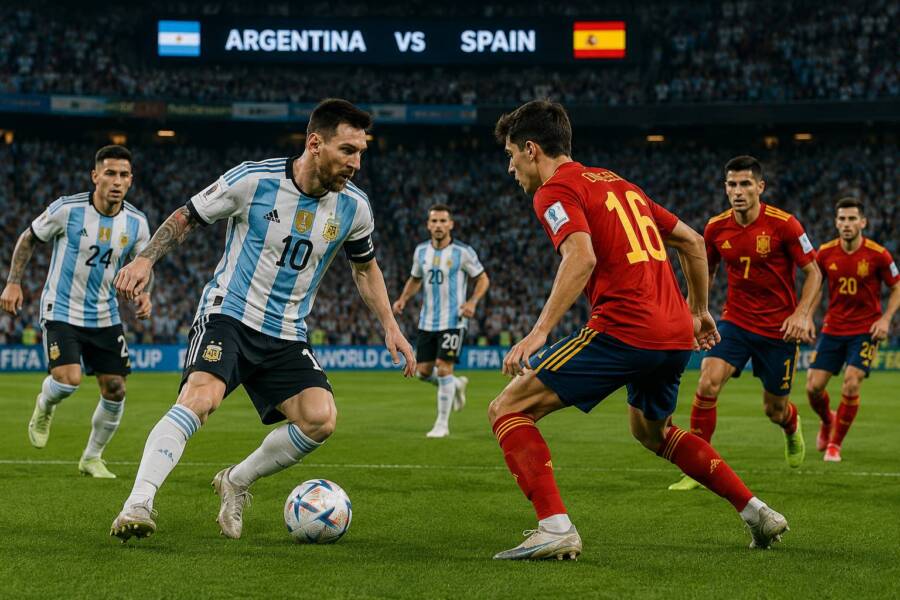
Now that the 2026 FIFA World Cup has reached its final stage, we have enough evidence to make an informed prediction rather than relying on guesswork.
In this article, we’ll examine:
- each finalist’s performances
- attacking and defensive statistics
- tactical strengths
- historical records
- momentum
- AI-based prediction models
- and finally reveal which team appears most likely to lift the World Cup trophy.
Is It Really Possible to Predict the World Cup Winner?
The short answer is:
Yes—but never with 100% certainty.
Unlike league competitions played over dozens of matches, the FIFA World Cup is a knockout tournament where one bad game, an injury, or even penalties can completely change history.
However, prediction models today analyze hundreds of variables:
- goals scored
- expected goals (xG)
- goals conceded
- possession
- passing efficiency
- pressing intensity
- squad depth
- player fitness
- historical tournament performance
- FIFA rankings
- Elo ratings
- betting markets
This is why companies like Opta simulate tournaments thousands of times before estimating each team’s probability of winning.
What Has the 2026 World Cup Told Us?
The expanded 48-team tournament has produced more matches than ever before, giving analysts a larger sample size to evaluate team quality.
Among dozens of participating nations, two teams consistently separated themselves from the competition:
Argentina
The defending champions have once again demonstrated remarkable consistency.
Their strengths include:
- clinical finishing
- tournament experience
- strong midfield control
- efficient defensive organization
- exceptional leadership
Argentina has won every match during this World Cup and entered the final with the tournament’s best attack, scoring 19 goals.
Spain
Spain has arguably been the tournament’s most tactically disciplined side.
Their campaign has featured:
- dominant possession
- structured pressing
- excellent ball circulation
- organized defending
- one of the youngest squads in the competition
Perhaps the most impressive statistic is that Spain conceded only one goal on its route to the final while maintaining a long unbeaten streak.
Statistical Comparison
| Category | Argentina | Spain |
|---|---|---|
| Goals Scored | Outstanding | Excellent |
| Goals Conceded | Very Low | Best in Tournament |
| Experience | Elite | High |
| Tactical Flexibility | Excellent | Elite |
| Squad Depth | Excellent | Excellent |
| Momentum | Very Strong | Very Strong |
Neither team reached the final by luck.
Both have consistently defeated elite opponents while adapting tactically throughout the tournament.
Historical Trends That Matter
World Cups often follow historical patterns.
Champions usually have:
- a world-class goalkeeper
- defensive stability
- elite midfield control
- experienced coaching
- players accustomed to winning major tournaments
Both finalists meet these criteria.
Argentina is chasing consecutive World Cup titles—something no team has achieved since Brazil in 1962—while Spain seeks its second World Cup after its 2010 triumph.
What Do AI Prediction Models Say?
Modern prediction systems combine:
- Elo ratings
- expected goals
- player performance
- historical data
- Monte Carlo simulations
- machine learning
These models generally favored the strongest teams entering the knockout rounds, with Argentina among the leading contenders based on simulation probabilities.
However, AI does not “know” the future. It estimates probabilities, not certainties.
Key Players Who Could Decide the Final
Lionel Messi
Even at this stage of his career, Messi has remained decisive throughout the tournament and has been central to Argentina’s attacking success.
Lamine Yamal
The teenage sensation has become one of football’s brightest stars.
His pace, creativity, and ability to break defensive lines have transformed Spain’s attack.
Tactical Battle
This final presents one of the tournament’s most fascinating contrasts.
Argentina thrives in transition:
- quick attacks
- vertical passing
- clinical finishing
Spain prefers:
- long possession
- positional play
- patient buildup
- defensive control
Whichever team imposes its preferred rhythm will likely gain the upper hand.
Can Statistics Predict the Champion?
Statistics are excellent indicators but never guarantees.
Football remains unique because:
- one red card changes everything
- penalties are unpredictable
- injuries matter
- moments of brilliance can outweigh trends
Even the best forecasting models assign probabilities rather than certainties.
Our Prediction
Based on:
- tournament performances
- attacking production
- defensive consistency
- tactical balance
- player quality
- momentum
- historical trends
Argentina enters the final with a slight edge.
Reasons include:
- greater experience in high-pressure knockout matches
- the tournament’s most prolific attack
- proven ability to win close games
- leadership from an experienced core
However, the margin is extremely small.
Spain arguably owns the tournament’s strongest defensive structure and has looked exceptionally organized throughout the competition.
Predicted Result
Argentina 2–1 Spain (after extra time)
Estimated probabilities
- Argentina: 54%
- Spain: 46%
These percentages reflect an informed assessment based on current form and publicly available performance data, not a guaranteed outcome.
Final Thoughts
Can we predict who will win the FIFA World Cup?
Yes—but only in terms of probabilities.
The 2026 tournament has shown why football captivates billions of fans. The finalists earned their places through tactical excellence, resilience, and consistent performances, making this one of the most balanced World Cup finals in recent history.
If Argentina maintains its attacking efficiency, it has a narrow advantage.
If Spain controls possession and continues its defensive dominance, it has every chance of lifting the trophy.
One thing is certain: the final promises to be one of the biggest matches in modern football.

TechnologyHQ is a platform about business insights, tech, 4IR, digital transformation, AI, Blockchain, Cybersecurity, and social media for businesses.
We manage social media groups with more than 200,000 members with almost 100% engagement.