




















If you’d told someone a decade ago that some of America’s richest tech moguls would be spending hundreds of millions to erect colossal statues of gods, heroes and allegories, they might have laughed. But today this is happening.
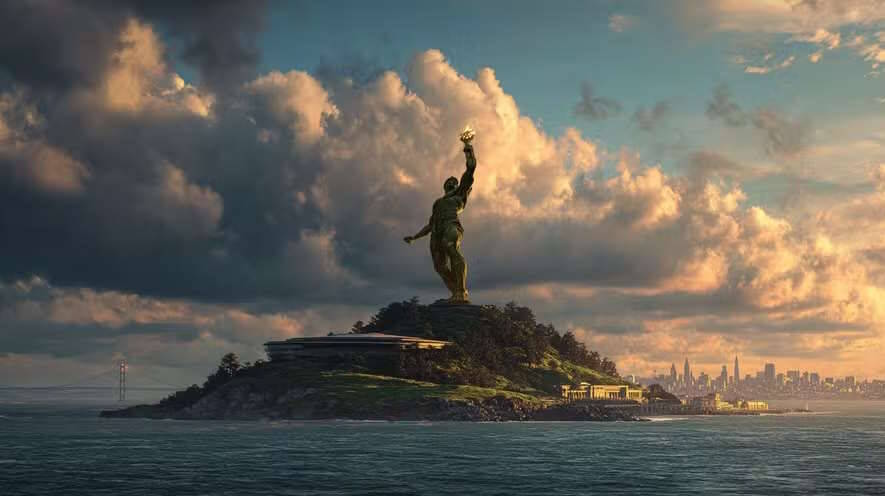
What’s going on here? Why giant statues? What’s behind this trend—and is it just a quirky vanity project or something deeper? In this long-form piece, we’ll dive into the phenomenon: the who, the what, the why, and the implications for society, culture and tech.
We’ll explore the meaning of monumental sculpture in history, examine which tech billionaires are involved and what they are building, uncover the motivations (legacy? myth-making? power?) and ponder why this matters to you. Meanwhile we’ll sprinkle in some SEO-friendly long-tail keywords and engage you with anecdotes, perspectives and cultural commentary.
Let’s step into the realm of the towering statues, the tech-overlords, and the new age of monument-making.
Section 1: A Brief History of Monumental Statues — Because Context Matters
Monuments and statues have always been about more than marble and bronze. From the Colossus of Rhodes to the Statue of Liberty, monumental sculpture has served as a signal of power, a claim to greatness, a cultural statement.
-
In ancient times, big statues conveyed kingship or divine favour.
-
In the 19th and 20th centuries, national monuments (think: the Statue of Liberty) claimed identity and ideology.
-
In public spaces, they anchored memory, ritual and civic pride.
So when modern tech billionaires decide to go big with statues, they are tapping into a very old cultural muscle. It’s not just about aesthetics—though the aesthetic shock of a giant statue certainly helps. It’s about legacy, narrative and the spectacle of power.
Section 2: Who’s Doing It? A Look at the Tech Titans and Their Monumental Ambitions
Let’s examine some of the key players and projects behind this trend.
Joe Lonsdale, Peter Thiel’s Circle & The Classical Aesthetic
According to a report in Gizmodo titled “Tech Bros Are Obsessed With Statue-Maxxing”, several Republican-aligned tech investors are actively planning or building large statues in the U.S.
One example: Joe Lonsdale, co-founder of Palantir Technologies, is described as a “classical aestheticist”. He has commissioned smaller-scale neoclassical busts and sculptures, and appears to aspire to something much larger.
Ross Calvin – The Prometheus Project on Alcatraz
Ross Calvin, a bitcoin-mining enthusiast, reportedly has his sights on building a 450-foot tall statue of the Greek god Prometheus on Alcatraz Island. The plan: a nickel-bronze alloy statue visible from much of the Bay Area, accompanied by a technology museum.
Elad Gil – Monumental: “An Ode to the Future”
Then there’s Elad Gil. He started a venture called Monumental, with the ambition of financing someone to build statues that serve as “an ode to the future, which civilisation at its peak always do”.
Mo Mahmood – The 650-Foot Washington Statue
Mo Mahmood wants to build a 650-foot statue of George Washington (though for now he is reportedly working on a 50-foot version set to be unveiled on July 4, 2026).
Why it’s All Connected to Tech, Money & Ideology
These aren’t artists or traditional patrons commissioning statues willy-nilly. These are tech billionaires and ultra-wealthy investors. They bring money, ambition, ideology and tech-culture mindsets. Their projects are often tied to their worldview: that of disruption, futurism, classical revival—and yes, spectacle.
Section 3: Why Giant Statues? The Motivations Behind the Monumental Trend
So what’s motivating this behavior? Below are several overlapping reasons.
1. Legacy & Immortality
When you’re worth billions, building a massive statue is a way of saying: I want my name (or my idea) to last beyond me. The sheer scale helps. It’s not “here’s a building I helped fund” — it’s “here is a giant symbolic structure you can see from miles away”.
2. Myth-Making & Storytelling
These statues aren’t simply decorative. They evoke mythic themes: gods, heroes, destiny. For example: Prometheus on Alcatraz. It taps into ideas of fire-bringer, inventor, liberator. The tech scene loves its heroic narratives. By building such statues, the tech elite insert themselves (or the values they represent) into mythic frameworks.
3. Power & Visibility
Big monuments are power signals. They claim space, they demand attention. A 450-foot statue changes a skyline. It forces people to look up, take pictures, talk. In a culture where visibility and media attention matter, that matters.
4. Aesthetic/Ideological Shift
There’s a movement among some tech billionaires toward “classical aesthetics” — a return to older forms, permanence over temporal trends. Giants are antithetical to the ephemeral. They are meant to outlast fashions, apps, IPOs.
5. Tech + Monument = Future-facing Hybrid
Some of these projects hint at blending technology and art. For example, the Prometheus statue will be accompanied by a technology museum. The modern tech-elite mindset is not just about building apps, but about leaving artifacts.
6. Reaction to Culture & Uncertainty
In recent years, many tech billionaires have invested in bunkers, survival assets, remote real-estate. Some analysts suggest that building giant statues is another facet of this “declare my significance” wave in uncertain times.
Section 4: What It Means for Culture, Cities & Democracy
Monumental statues built by private billionaires raise many questions and implications.
Urban & Architectural Impact
When a private actor erects a massive statue, it affects cityscapes, public realm, zoning, sight lines and public access. Who gets to decide? Will it become a tourist attraction or a private fortress?
Cultural Narratives & Who Builds History
These statues reflect the values of their creators. When a tech billionaire builds a 650-foot statue of Washington, what version of history is being promoted? Whose story? This raises the age-old question: who builds the monuments, and thereby who defines collective memory?
Inequality, Optics & Public Perception
As wealth inequality grows, the sight of ultra-wealthy individuals spending vast sums on private monuments can provoke public debate. Is it civic giving, or self-aggrandisement? The optics matter.
Tech Elite’s Relationship with Society
These grand gestures may underscore a disconnect: tech elites build castles (or statues) while much of society deals with other issues. It opens questions about responsibility, community, and how tech power is expressed physically.
Preservation, Maintenance and Future Proofing
Unlike an app that can be updated, a 450-foot statue has to be maintained for decades, potentially centuries. What if the tech or ideologies behind it fade? Will it become a monument to hubris?
Section 5: Yes, But Is It Silly? Some Critical Perspectives
Of course, scepticism abounds.
-
Some see the trend as blatant vanity, spending rich-people cash on monuments instead of meaningful social investments.
-
Others view it as an attempt to stamp a legacy prematurely—like writing your memoir while still alive.
-
Critics ask: what happens when the wallet that funded the statue disappears, or the ideology shifts? Will these statues become white elephants?
-
The Gizmodo piece calls them “markers of a dying empire.”
In short, while the ambition is huge, the risk of failure, irrelevance or backlash is real.
Section 6: For the Curious Reader — What to Watch & Where It’s Heading
If you’re intrigued by this phenomenon, here are some things to keep an eye on:
-
Which statues get approved, and where: Are they on public land, private estates, or somewhere in between?
-
The design and symbolism: Are they classical gods, technology celebrations, national icons or new hybrids?
-
Public reaction: Will citizens embrace these monuments, oppose them, or just ignore them?
-
Funding and business model: Are these funded purely by private capital? Do they expect tourist traffic, branding, or civic legitimacy?
-
Longevity and maintenance: Who will look after the statues in 50 years? Will they adapt to evolving cultural values?
-
Related trends: This is part of a broader push by some tech billionaires into real-world expressions — bunkers, private islands, large art pieces. See how it connects. 조선일보+1
Section 7: Why You Should Care (Beyond the Instagram Shots)
You might think: “This has nothing to do with me.” But actually, you might care for several reasons:
-
Cultural Influence: When tech money shapes space, memory and meaning, it affects everyone.
-
Urban Change: Giant statues can re-shape public realms and access.
-
Wealth & Responsibility: The trend is a visible symbol of how extreme wealth expresses itself—worth knowing if you care about democracy, fairness or citizenship.
-
Symbolic Economy: In a mediated world, monuments become brands. The statues might become talking-points in media, tourism, social media—and you might see them.
-
Future of Public Art: The line between public art and private spectacle blurs. What used to be a civic decision might become a private project.
Section 8: How to Write About This (If You’re Blogging or Reporting)
If you’re inspired to write your own piece on this trend, here are some SEO and storytelling tips:
-
Use long-tail keywords like:
-
“tech billionaires giant statues United States”
-
“why are tech investors building colossal monuments”
-
“modern monumental sculpture by tech elite 2025”
-
“private funded giant statue project USA Bay Area”
-
“statue-maxxing trend among Silicon Valley billionaires”
-
-
Structure your article with engaging sub-headings (people skim).
-
Include examples, quotes or visuals of the statues (renders, project announcements).
-
Raise critical questions (not just hype) to engage thoughtful readers.
-
Provide cultural/historical context (makes the piece richer and authoritative).
-
End with “so what?” — why this trend matters for readers.
-
Use meta description that teases the drama (“obsessed”, “giant statues”, “tech billionaires”) to boost click-through.
-
Include internal links if published on a site (e.g., link to articles about tech wealth, public art, monuments).
-
Add images or visuals of proposed statues for shareability on social media.
Conclusion
The fact that U.S. tech billionaires are building (or planning to build) giant statues is more than just an odd footnote. It’s a symbolic window into how power, wealth, technology and culture are intertwining in the 21st century.
From Ross Calvin’s colossal Prometheus on Alcatraz to Mo Mahmood’s towering George Washington, these projects blur legend with ledger; myth-making with money. They raise questions about legacy, public space, inequality, aesthetics—and what kind of monuments the future will inherit.
Whether you consider them visionary or venerable (or vain), these statues deserve attention. They may look like big pieces of art, but they are also big statements about who gets to build, what we value, and how we commemorate.
If nothing else, next time you hear “statue-maxxing”, you’ll know what it means — and why it might matter.

TechnologyHQ is a platform about business insights, tech, 4IR, digital transformation, AI, Blockchain, Cybersecurity, and social media for businesses.
We manage social media groups with more than 200,000 members with almost 100% engagement.