




















Why Do People Pay for Wars They Never Asked For?
If you take a look at today’s headlines, one thing stands out: every time war breaks out, it’s never the leaders who take the hit. Politicians stand on podiums, generals pose in shiny uniforms, and corporations sign billion-dollar defense contracts. Meanwhile, ordinary families are the ones who end up losing their homes, skipping meals, or burying their loved ones.
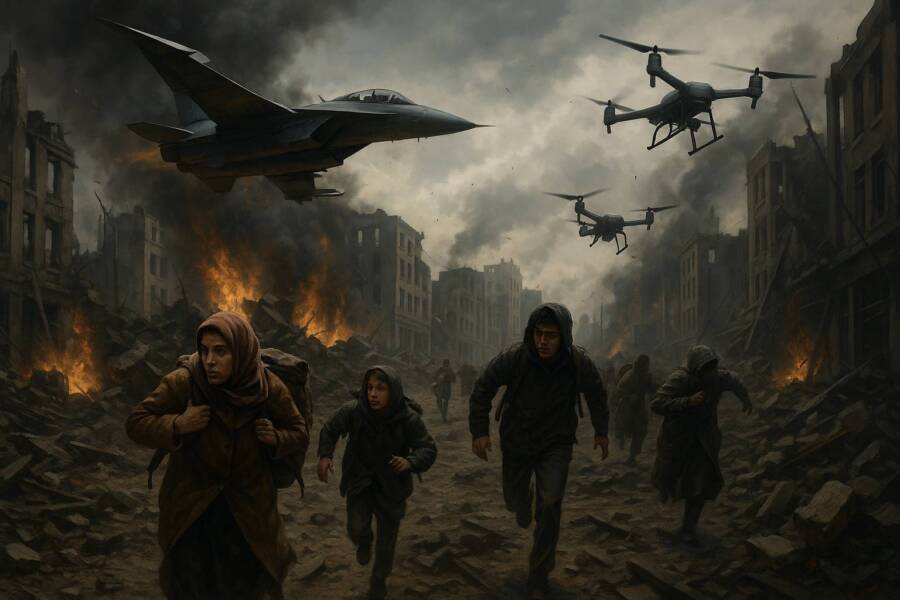
Here’s the uncomfortable truth: governments around the world are spending billions of tax dollars on war technology—on drones, tanks, missiles, nuclear programs, cyberwarfare, and artificial intelligence weapons—while everyday citizens struggle to pay rent, access healthcare, or send their kids to decent schools.
It’s a global paradox: the same governments that claim they “can’t afford” to fix housing crises or expand healthcare somehow always have money for the latest high-tech weaponry. Why does this keep happening? And more importantly, why do ordinary people suffer the most while the powerful stay hidden and protected?
1. The First Victims of War: Ordinary People, Not Leaders
When conflict erupts, the human cost is immediate. But the burden doesn’t fall on the politicians who sign the orders—it falls on regular citizens.
-
Families are displaced. Millions are forced to leave their homes, sometimes with nothing but a backpack.
-
Children lose education. Schools close or are bombed. An entire generation’s future disappears.
-
Healthcare collapses. Hospitals overflow, medicine runs out, and doctors flee conflict zones.
-
Basic survival gets harder. Jobs vanish, food prices skyrocket, and electricity becomes unreliable.
Meanwhile, leaders sit in secure bunkers or presidential palaces, far removed from the chaos. Ordinary people live with bombs overhead and poverty underfoot. They are always the first casualties—economically, emotionally, and physically.
2. Billions for War Technology, Pennies for Peace
Here’s the staggering part: while citizens struggle, governments pour astronomical sums into military technology.
A Look at the Numbers
According to the Stockholm International Peace Research Institute, global military spending exceeded $2.2 trillion in 2023. That number keeps climbing every year.
Where does the money go?
-
Development of drones capable of precision strikes.
-
Artificial intelligence for autonomous weapons.
-
Cyberwarfare systems to attack infrastructure.
-
Nuclear arsenal modernization.
-
Hypersonic missiles and space-based surveillance.
It’s the arms race of the 21st century—and taxpayers are footing the bill.
What Could That Money Do Instead?
With just a fraction of that $2 trillion, the world could:
-
End global hunger multiple times over.
-
Provide universal healthcare to billions.
-
Transition entire countries to renewable energy.
-
Build millions of affordable homes.
But instead, we’re building weapons that, if used, could destroy everything.
3. The Politics of Fear and Justification
So why do governments keep doing this? The answer lies in one powerful tool: fear.
Leaders justify military technology spending by constantly pointing to threats:
-
“If we don’t arm ourselves, enemies will.”
-
“National security must come first.”
-
“Peace through strength is the only way.”
It’s a psychological game. By keeping populations scared—of terrorists, rival nations, or imagined threats—leaders secure public approval for outrageous war budgets.
Meanwhile, weapons manufacturers lobby politicians and donate to campaigns, ensuring the cycle continues. It’s not just about security; it’s also about profit. War technology isn’t just defense—it’s big business.
4. Hidden Behind Power: Leaders Stay Safe While People Pay
It’s no coincidence that leaders rarely suffer in wars they promote.
-
They have bunkers. Some world leaders reportedly have entire underground cities equipped for survival.
-
They have security. Armies of bodyguards and military escorts keep them far from danger.
-
They control the story. State media, propaganda, and PR machines make sure they look like “protectors,” not cowards.
Take modern examples:
-
Putin has been linked to multiple underground hideouts while Russians endure casualties and economic sanctions.
-
Trump boasted about expanding military budgets, but ordinary Americans saw cuts in healthcare and social programs.
-
Xi Jinping invests heavily in military modernization, while everyday Chinese workers face rising costs of living and censorship.
The pattern is the same everywhere. Leaders stay hidden, safe, and well-fed. The public pays—in taxes, in poverty, and sometimes in blood.
5. History Shows the Same Pattern
This isn’t new. History shows us that leaders have always invested in weapons while letting their citizens carry the burden.
-
Hitler poured money into tanks, rockets, and planes while ordinary Germans suffered shortages.
-
Stalin built an enormous military machine, even as millions starved during famines.
-
George W. Bush launched trillion-dollar wars in Iraq and Afghanistan, with ordinary American soldiers and Middle Eastern civilians paying the ultimate price.
As the old saying goes: “The rich declare war, but it’s the people who fight it.”
The technology may have changed—from swords to drones—but the pattern is painfully the same.
6. The Real Cost of Military Budgets
Spending on war technology isn’t just about the trillions wasted. It also means fewer resources for the things people actually need.
What Gets Cut to Pay for Weapons?
-
Education: Teachers underpaid, schools outdated.
-
Healthcare: Hospitals understaffed, medicines overpriced.
-
Housing: Affordable housing projects shelved.
-
Infrastructure: Bridges, roads, and trains left in disrepair.
-
Social Programs: Cuts to welfare, pensions, and disability support.
The result? Citizens are told there’s “no budget” for essential services—yet governments somehow always find billions for the latest fighter jets.
Double Burden on Citizens
The cost isn’t just financial. Citizens also bear the psychological burden of living in societies that prioritize bombs over books, missiles over medicine. The message is clear: survival of the state matters more than survival of its people.
7. The Technological Arms Race: Are We Safer or Just Poorer?
Supporters of military technology argue it keeps nations safe. But is that really true?
-
Nuclear weapons haven’t prevented conflicts; they’ve just made them riskier.
-
Cyberwarfare opens the door for attacks on hospitals, power grids, and essential services.
-
AI-driven drones reduce accountability, making it easier to start wars without public backlash.
Instead of creating peace, new war technology often creates instability—and ordinary people are the ones most vulnerable when systems fail.
So are we really safer? Or just living in a world where trillions are spent on tools of destruction while the basics of life remain unaffordable?
8. Can the Cycle Be Broken?
The good news: cycles can be broken. But it won’t happen automatically. Citizens need to demand accountability.
Steps That Can Make a Difference
-
Transparency: Governments should publish exactly how tax money is being spent on military vs. public needs.
-
Public Pressure: Protests, petitions, and activism can shift public opinion and force leaders to rethink budgets.
-
Voting Power: Electing leaders who prioritize peace, healthcare, and education over weapons.
-
Support Peace Movements: Organizations worldwide are pushing for disarmament and reinvestment in human development.
Even small changes—like redirecting 10% of global military spending—could transform healthcare, education, and climate action worldwide.
9. A Future Worth Fighting For
Imagine a world where “defense spending” meant defending people against hunger, disease, and poverty. Where technology was built for healing, not for killing. Where the billions now spent on weapons created sustainable energy, clean water, and thriving schools.
That’s not a fantasy. It’s a choice. But to get there, citizens have to stop accepting the lie that more weapons equal more safety.
Conclusion: Weapons Don’t Build Futures, People Do
Wars don’t belong to governments—they belong to the people who suffer them. And as long as billions keep flowing into war technology instead of peace, ordinary citizens will continue to pay the highest price.
The real question is: how much longer will we allow leaders to hide behind fear, profit, and weapons while the world burns?
If you believe that public money should go to peace, not war, share this message, start conversations, and demand change. Because futures aren’t built with bombs—they’re built with people.

TechnologyHQ is a platform about business insights, tech, 4IR, digital transformation, AI, Blockchain, Cybersecurity, and social media for businesses.
We manage social media groups with more than 200,000 members with almost 100% engagement.