





















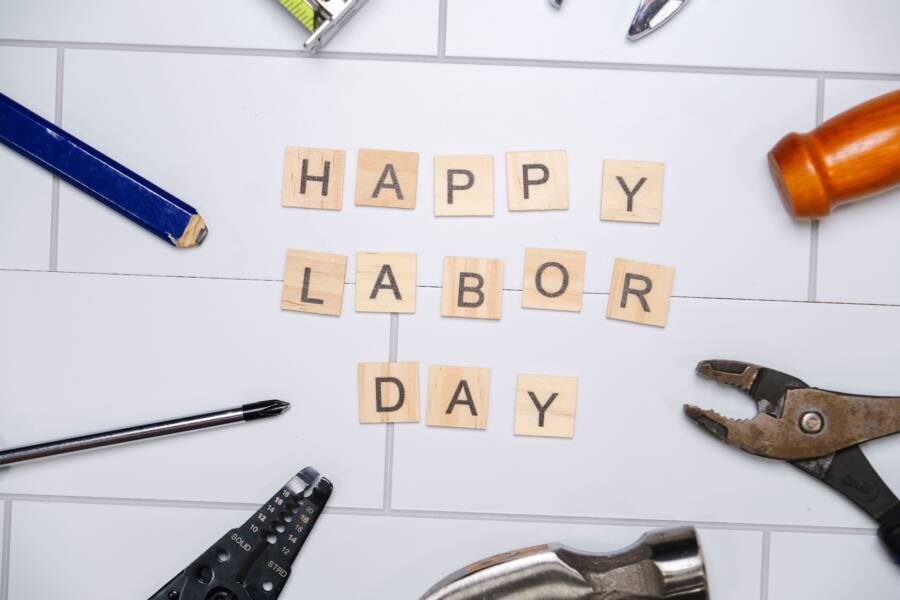
Labour Day is often associated with a day off, a long weekend, family gatherings, sales and the unofficial end of summer in some countries. But behind the holiday is a much bigger story — one involving strikes, dangerous workplaces, low wages, long working hours and generations of people demanding something that sounds surprisingly simple: a fair deal for workers.
In 2026, that conversation is far from over.
Workers today enjoy protections that would have seemed revolutionary to many employees a century ago. Paid holidays, limits on working hours, workplace safety regulations, minimum wages and protection against certain forms of discrimination have transformed working life in many parts of the world.
At the same time, new problems are appearing.
Artificial intelligence is changing jobs faster than many workers can adapt. The gig economy has blurred the definition of employment. Housing and living costs continue to put pressure on salaries. Younger workers are struggling to find stable career paths, while millions of people worldwide continue to work without adequate social protection.
So perhaps Labour Day should not simply be about celebrating the past.
It is also a good moment to ask a harder question:
How much progress have workers really made — and what still needs to change?
Why Do We Celebrate Labour Day?
The origins of Labour Day are closely connected to the labour movement of the 19th century.
Industrialisation created enormous economic growth, but working conditions were often brutal. Employees could work extremely long days in factories, mines and workshops with few safety protections and very limited bargaining power.
One of the major demands of organised labour became the eight-hour working day.
The idea was straightforward: eight hours for work, eight hours for rest and eight hours for personal life.
What seems normal today was once considered radical.
Workers organised demonstrations, strikes and political campaigns to demand shorter working hours and better conditions. Over time, these movements helped establish many of the protections that modern employees now take for granted.
Different countries celebrate workers on different dates. International Workers’ Day, often called May Day or Labour Day, is observed on May 1 across much of the world. In the United States and Canada, Labor Day is celebrated on the first Monday of September.
Despite the different dates, the basic idea is similar: recognising the contribution workers make to society and reflecting on their rights and conditions.
What Workers Can Celebrate Today
It is easy to focus only on what is wrong with modern employment. But Labour Day is also an opportunity to recognise how dramatically working conditions have improved over the last century.
The Working Day Became More Reasonable
For millions of workers, the idea of routinely working 10, 12 or even 14 hours per day has largely disappeared.
The eight-hour day and 40-hour working week became standards in many economies, even if overtime remains common in certain industries.
That change represents one of the greatest achievements of the organised labour movement.
Today, the debate has moved even further.
Some companies and governments are experimenting with four-day workweeks, flexible schedules and hybrid working arrangements.
The conversation is no longer simply about reducing exhausting working hours. Increasingly, it is about finding a healthier relationship between work and personal life.
Workplace Safety Has Improved Dramatically
Modern workers sometimes complain about workplace regulations and paperwork, but many of those rules exist because people were once routinely injured or killed doing jobs without proper protection.
Safety standards covering machinery, construction sites, chemicals, protective equipment and working environments have saved countless lives.
Employers in many countries now have legal obligations to identify risks, provide safety equipment and train workers.
These protections did not appear automatically.
They were developed after decades of workplace accidents, political pressure, union campaigns and legislation.
That is unquestionably something worth celebrating.
Paid Leave and Social Protections Became Normal
Paid holidays, sick leave, maternity protection, pensions, unemployment assistance and workplace insurance would have been unimaginable luxuries for many workers during the early Industrial Revolution.
Today, they form an important part of employment systems across much of the world.
The level of protection varies enormously between countries, but the underlying principle has become widely accepted:
A worker should not necessarily lose everything simply because they become sick, injured, unemployed or too old to continue working.
That represents enormous social progress.
Workers Have More Legal Rights
Another major achievement has been the expansion of legal protections in the workplace.
Laws in many countries now prohibit or restrict discrimination based on factors such as sex, race, disability, age or other protected characteristics.
Employees may also have rights regarding dismissal, workplace harassment, union membership and collective bargaining.
Of course, having a law does not guarantee that every workplace follows it.
But having legal protection gives workers something previous generations often lacked: a mechanism for challenging abusive treatment.
But the Labour Day Story Is Not Finished
Celebrating historical progress should not mean pretending today’s labour market is perfect.
In fact, the International Labour Organization warned in its Employment and Social Trends 2026 report that although global unemployment remains relatively stable, improvements in job quality have stalled.
The ILO projects global unemployment at around 4.9% in 2026, while approximately 2.1 billion people are expected to work in informal employment, often without the protections associated with formal jobs.
That distinction matters.
Having a job and having a good job are not necessarily the same thing.
And this is where the more uncomfortable side of Labour Day begins.
Wages Are Still a Major Problem
For many households, employment no longer automatically guarantees financial security.
People can work full-time and still struggle with rent, mortgages, food, childcare, transportation and energy costs.
This has created a strange contradiction.
Workers in modern economies are often more productive and technologically capable than previous generations, yet many still feel financially insecure.
That frustration helps explain why wage growth, minimum-wage policies and the cost of living remain major political and economic debates.
Labour Day therefore raises a simple but important question:
Should someone working full-time be able to afford a reasonable standard of living?
For many workers, the answer is obvious.
Turning that principle into economic reality is much more difficult.
Job Security Has Changed
Previous generations often imagined a career as something relatively predictable.
You joined a company, developed experience, earned promotions and perhaps stayed there for decades.
That model has weakened considerably.
Temporary contracts, outsourcing, freelance work, platform work and frequent job changes have created more flexibility — but also more uncertainty.
For some people, that flexibility is liberating.
For others, it means never knowing exactly how much they will earn next month.
This is particularly important because many employment protections were originally designed around the traditional employer-employee relationship.
Digital platforms and new forms of work do not always fit neatly into that model.
The ILO has acknowledged that digitalisation, globalisation and technological change are creating forms of employment that challenge traditional definitions of the employment relationship.
That means labour legislation may need to evolve again.
AI Is Becoming the New Labour Revolution
If industrial machinery transformed work in the 19th and 20th centuries, artificial intelligence could become one of the defining labour issues of the 21st century.
And the transformation is already underway.
Generative AI can now write documents, analyse information, create software, translate languages, produce images, handle customer requests and perform administrative tasks that previously required human workers.
But the situation is more complicated than the idea that “AI will take everyone’s jobs.”
Research published by the ILO in 2026 warns that AI exposure indicators should not automatically be interpreted as predictions of mass unemployment. Instead, AI is likely to transform individual tasks and occupations in different ways.
Another ILO review published in June 2026 found evidence of productivity gains from generative AI but said widespread job displacement remained limited so far. The bigger concerns included inequality, fewer opportunities for some younger workers and changes in worker autonomy and job quality.
So the Labour Day question for the AI era may not simply be:
“Will AI replace workers?”
It may be:
“Who receives the benefits when AI makes workers more productive?”
If technology allows one employee to accomplish twice as much, does that lead to better wages, shorter working hours and improved quality of life?
Or simply fewer employees doing more work?
That debate could define the next generation of labour rights.
Skills Are Becoming More Important Than Ever
The good news is that technology does not only eliminate jobs. It also creates new ones and changes existing occupations.
According to research published by the ILO in August 2026, AI adoption is increasing demand for digital knowledge alongside higher-order cognitive and socioemotional abilities. AI literacy, adaptability and human judgment are becoming increasingly important workplace skills.
This suggests that education can no longer end when someone leaves school or university.
Workers may increasingly need to learn throughout their careers.
Companies and governments also have a responsibility here.
If technology transforms millions of jobs, simply telling workers to “adapt” is not enough. Training, reskilling and accessible education will be essential if the benefits of AI are to be broadly shared.
Inequality Remains One of Labour Day’s Unfinished Battles
The modern workforce is not experiencing technological change equally.
The ILO has found, for example, that women may face greater exposure to generative AI because they are disproportionately represented in occupations containing tasks that can potentially be automated, while remaining underrepresented in many technology and STEM fields.
There are similar differences between richer and poorer economies.
A joint ILO–World Bank study examining 135 countries warned that developing economies could experience disruption from generative AI before receiving its productivity benefits because of differences in infrastructure, digital access and the types of work performed.
The future of work therefore cannot be discussed purely as a technological question.
It is also an economic and social question.
Who has access to technology?
Who receives training?
Who owns the technology?
Who receives the productivity gains?
And who carries the risk when industries change?
Work-Life Balance Is the Next Frontier
One of the most interesting changes in attitudes toward work is cultural rather than technological.
For much of modern history, professional success was associated with working longer hours.
Today, increasing numbers of workers are questioning that assumption.
Remote work, hybrid work, flexible schedules and experiments with shorter working weeks have encouraged people to reconsider the relationship between productivity and time spent physically at work.
The pandemic accelerated that debate, but it did not create it.
People increasingly want employment that provides financial stability without consuming their entire lives.
That may eventually become one of the biggest labour achievements of this century.
The workers of the 19th century demanded the eight-hour day.
The workers of the 21st century may demand something slightly different:
more control over their time.
So, What Should We Celebrate on Labour Day 2026?
We should celebrate the fact that generations of workers successfully changed conditions that once seemed impossible to change.
Shorter working days.
Safer factories.
Paid holidays.
Social security.
Collective bargaining.
Protection against discrimination.
Better working conditions.
These achievements demonstrate something important: labour markets are not fixed systems. They evolve according to technology, economics, legislation and social expectations.
But Labour Day should also remind us how incomplete that progress remains.
Billions of people still work informally. Many employees struggle financially despite working full-time. Young workers face uncertain career prospects. Technology is creating both opportunity and anxiety. And the balance of power between companies, platforms, governments and individuals is being renegotiated once again.
Labour Day Is About the Future, Not Just the Past
Perhaps the biggest mistake we can make is treating Labour Day purely as a historical celebration.
Its history matters.
But its future matters more.
The workers who fought for an eight-hour working day were responding to the technology and economic structures of their era.
Today’s workers face different challenges.
Artificial intelligence.
Automation.
Remote work.
Digital surveillance.
Algorithmic management.
Platform employment.
Ageing populations.
Global competition.
Reskilling.
Work-life balance.
The specific problems have changed, but the underlying debate remains remarkably familiar:
How can economic progress improve human life instead of simply increasing production?
That question was relevant when factory workers organised more than a century ago.
It may be even more important in 2026.
So this Labour Day, there is plenty to celebrate — but also plenty left to accomplish.
And perhaps that is the real meaning of Labour Day.
It is not simply a celebration of what workers have already won.
It is a reminder that the future of work is still being written.

TechnologyHQ is a platform about business insights, tech, 4IR, digital transformation, AI, Blockchain, Cybersecurity, and social media for businesses.
We manage social media groups with more than 200,000 members with almost 100% engagement.