




















How Technology Helps Prevent Election Fraud in Wisconsin: Inside the Security of Modern Voting
Election security has become one of the most discussed topics in American politics. Every election cycle brings questions about voting machines, paper ballots, cybersecurity, recounts, and whether technology makes elections safer or creates new risks.
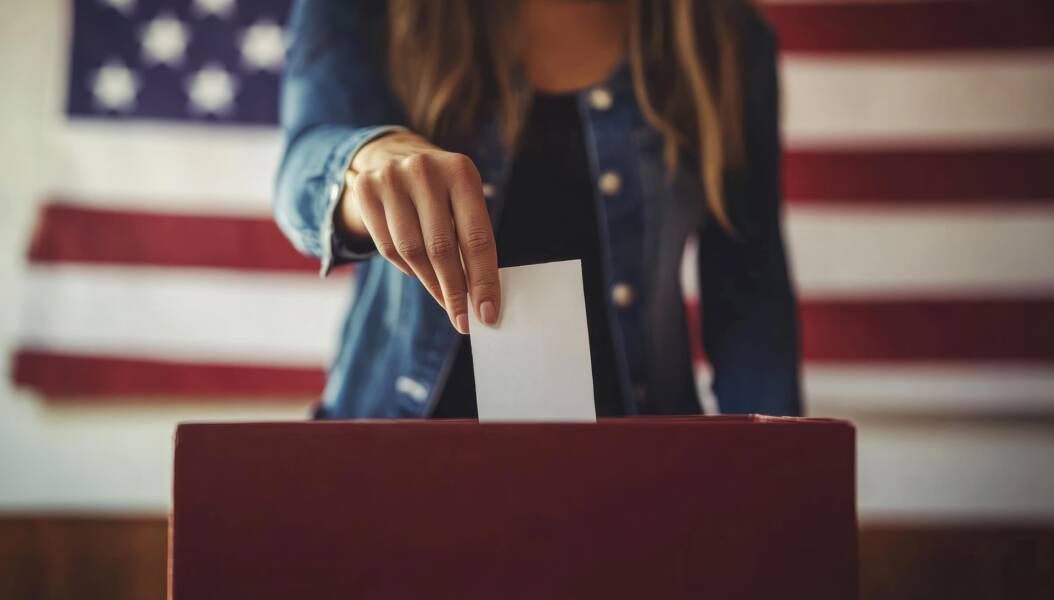
Wisconsin offers an interesting example because its election system combines traditional paper ballots with modern technology.
Rather than simply replacing paper with computers, technology can be used to count votes faster, detect problems, maintain accurate voter records, strengthen cybersecurity, and make election results easier to verify.
So, how exactly can technology help prevent election fraud in Wisconsin?
The answer is more complicated — and more interesting — than simply choosing between electronic voting and paper ballots.
How Does Voting Work in Wisconsin?
One of the most important things to understand is that Wisconsin elections generally rely on paper ballots.
At many polling locations, voters mark a paper ballot and then insert it into an electronic optical scanner. The scanner reads the ballot and records the votes electronically, while the original paper ballot remains available as a physical record.
This creates two useful layers:
Paper provides the physical evidence of the vote, while technology provides speed and automation when counting it.
Accessible electronic voting equipment is also available to help voters who may have difficulty marking a traditional ballot.
This hybrid approach is important because election security isn’t necessarily about choosing either paper or technology. A strong system can use both.
Why Paper Ballots Still Matter in a High-Tech Election
It may seem strange that paper remains important in an era of smartphones, artificial intelligence, cloud computing, and digital banking.
But elections have a special requirement: the final result needs to be independently verifiable.
Imagine that a computer reports:
Candidate A: 10,250 votes
Candidate B: 9,870 votes
How can election officials confirm that those numbers accurately represent what voters selected?
If there are original paper ballots, officials can go back to them.
The ballots can be manually examined or recounted and compared with the electronically reported totals.
That creates something extremely valuable in election security: an independent audit trail.
If a scanner malfunctions or its electronic results are questioned, the physical ballots haven’t disappeared.
Technology therefore doesn’t necessarily need to replace paper. It can work alongside it.
How Technology Can Help Prevent Election Fraud in Wisconsin
Modern election security involves much more than the machine that counts your ballot.
Technology can protect different stages of an election, from voter registration to final certification.
1. Electronic Ballot Scanners Reduce Human Counting Errors
Counting thousands or millions of ballots entirely by hand can be slow and labor-intensive.
Humans can also make mistakes.
Optical scanners automate much of this process. They can read large numbers of ballots consistently and produce preliminary totals much faster than a full manual count.
The important security feature is that the scanner doesn’t eliminate the original ballot.
The paper remains available if officials need to verify the machine’s count.
This creates an effective combination:
electronic counting for efficiency + paper ballots for verification.
2. Paper Records Allow Results to Be Audited
Auditing is one of the strongest tools available for building confidence in election results.
After an election, officials can compare physical ballots with electronically recorded totals.
If the two agree, that provides additional evidence that the electronic counting process operated correctly.
If there is a discrepancy, investigators have a physical record they can examine.
This is one reason many election-security experts emphasize systems that maintain voter-verifiable paper records.
A computer can process information extremely quickly, but independent verification becomes much harder when the only record of a vote exists inside a computer.
3. Technology Can Detect Unusual Voting Patterns
Election technology can also help officials identify anomalies.
For example, computerized systems can potentially flag unusual patterns such as:
- unexpected changes in registration data;
- duplicate records requiring investigation;
- abnormal reporting patterns;
- inconsistencies between different election records;
- unusual system activity.
However, an anomaly is not automatically evidence of fraud.
There can be perfectly legitimate explanations for unusual data.
Technology is most useful here as a detection tool. It can identify something that deserves additional examination, while election officials determine what actually happened.
4. Cybersecurity Protects Election Infrastructure
Election security is no longer limited to protecting ballot boxes.
Modern elections involve databases, computers, websites, communication networks, and other digital infrastructure.
That means cybersecurity has become a major part of election administration.
Security measures can include access controls, system monitoring, authentication requirements, software testing, network protections, physical security, and procedures controlling who can access election equipment.
The objective is straightforward: an attacker shouldn’t be able to gain access to sensitive election systems without detection.
Technology creates certain cybersecurity risks, but properly implemented technology also provides powerful tools for detecting and preventing unauthorized activity.
5. Digital Voter Registration Systems Can Improve Accuracy
Accurate voter registration records are another important part of election security.
Computerized databases make it easier for election officials to maintain and search large numbers of voter records.
Technology can help identify records that require attention because of changes in addresses, duplicate information, deaths, or other eligibility-related issues.
Again, automated systems shouldn’t simply make every decision themselves.
The strongest approach combines automated detection with established legal procedures and human review.
Computers are extremely good at finding patterns.
Humans remain important for understanding what those patterns actually mean.
6. Electronic Poll Books Can Improve Election-Day Administration
Electronic poll books are another example of technology being used in elections.
Instead of relying exclusively on printed lists, election workers can use electronic systems to locate voter registration information more efficiently.
Depending on how a jurisdiction implements them, electronic poll books can make check-in faster and help election workers manage voter records more accurately.
But they also need strong security.
Election officials need contingency procedures in case equipment fails or connectivity becomes unavailable.
One of the recurring principles of election security is redundancy.
No critical election process should depend on a single technology working perfectly.
7. Technology Can Make Recounts More Efficient
Close elections occasionally require recounts.
This is another situation where combining technology with paper ballots becomes valuable.
Electronic records can help officials identify totals and organize election information quickly, while physical ballots provide the underlying evidence that can be inspected again.
A recount therefore doesn’t have to mean simply asking the same computer to calculate the same data a second time.
Officials can return to the ballots themselves.
That distinction is extremely important.
Paper Ballots vs. Fully Electronic Voting: Which Is Safer?
This is where the election-security debate becomes especially interesting.
A completely electronic system can have significant advantages.
Electronic voting can be fast, accessible, and capable of incorporating sophisticated security controls.
But a purely electronic voting system without an independently verifiable physical record has an important weakness.
If someone questions the software’s result, what independent evidence can be used to verify it?
With paper ballots, there is something physically separate from the computer.
That doesn’t make paper perfect.
Paper ballots can be lost, damaged, mishandled, or improperly counted. Physical security and chain-of-custody procedures therefore remain essential.
But paper has one major security advantage:
It cannot be remotely hacked through the internet.
This is why a hybrid architecture can be particularly attractive.
Technology handles tasks it performs well, while paper provides an independent record.
Could Artificial Intelligence Help Secure Future Elections?
Artificial intelligence could become increasingly relevant to election security.
AI systems are particularly good at analyzing enormous quantities of information and identifying unusual patterns.
In the future, AI could potentially help cybersecurity teams detect suspicious network activity, identify attempted intrusions, analyze system logs, or recognize unusual administrative patterns more quickly.
But AI introduces risks of its own.
AI-generated misinformation, deepfake videos, cloned voices, fake election announcements, and highly convincing fabricated content could confuse voters.
This means AI may simultaneously become an election-security tool and an election-security challenge.
The best use of AI in elections is therefore likely to involve supporting human investigators rather than replacing human judgment.
Blockchain Voting: Is It the Future?
Blockchain frequently appears in discussions about future voting technology.
The idea sounds attractive.
Because blockchain systems can create records that are difficult to alter without detection, supporters have proposed using similar technology to create secure digital voting systems.
But voting is much more complicated than transferring cryptocurrency.
A secure election must protect ballot secrecy while also ensuring that every legitimate vote is counted correctly.
It must prevent people from voting multiple times while avoiding a system that publicly reveals how an individual voted.
It also needs to remain accessible to people who aren’t technologically sophisticated.
For those reasons, blockchain voting should not automatically be considered safer simply because blockchain technology is involved.
Any new voting system needs extensive independent security testing before it can be trusted for public elections.
Why Transparency May Be More Important Than Sophisticated Technology
Election security isn’t purely a technical problem.
It is also a confidence problem.
A voting system can use extremely sophisticated encryption and still fail to inspire confidence if ordinary voters cannot understand how results are verified.
That is one reason paper ballots are powerful.
They’re easy to understand.
You mark a ballot.
The ballot is counted.
The ballot remains available.
If necessary, it can be counted again.
Technology should make that process stronger rather than unnecessarily obscure it.
The Human Element Still Matters
No technology can completely eliminate the human element from elections.
Election workers configure equipment, transport ballots, maintain voter records, inspect machines, investigate discrepancies, conduct audits, and certify results.
That means procedures are just as important as hardware.
Strong election security therefore involves multiple layers:
secure technology, physical ballots, access controls, documented procedures, bipartisan or multi-person oversight where required, testing, audits, recount mechanisms, and transparency.
If one layer fails, another should still protect the integrity of the election.
This concept is often called defense in depth in cybersecurity.
It’s a particularly useful way to think about election security.
Can Technology Completely Eliminate Election Fraud?
No.
No voting system can realistically guarantee that fraud, mistakes, equipment failures, or attempted interference will never occur.
The better objective is to design a system where manipulation is difficult, irregularities are detectable, and results can be independently verified.
That’s an important distinction.
Election security shouldn’t depend on trusting one machine, one person, one database, or one organization.
A resilient election system creates several independent ways of checking whether the final result is accurate.
What Could the Future of Wisconsin Elections Look Like?
Future election technology will probably focus increasingly on verification rather than simply automation.
Faster computers aren’t necessarily what elections need most.
Better auditing may be more valuable.
Cybersecurity monitoring could become more sophisticated. Election databases could become better at detecting inconsistencies. Artificial intelligence could help analysts identify suspicious activity.
But physical paper ballots may remain surprisingly important.
In fact, the more sophisticated digital threats become, the more valuable an independent offline record can be.
A paper ballot doesn’t need a software update.
It doesn’t have a password.
And nobody on the other side of the world can remotely connect to it.
That doesn’t mean abandoning technology.
It means using technology strategically.
The Bottom Line
The debate over election security is often presented as a choice between old-fashioned paper and modern electronic voting.
Wisconsin demonstrates why that can be the wrong way to look at the issue.
Paper and technology can perform different jobs.
Electronic systems can make elections faster, improve record management, assist voters, identify anomalies, and automate ballot counting.
Paper ballots provide something computers cannot provide by themselves: an independent physical record of voter choices.
Combine those elements with strong cybersecurity, secure chain-of-custody procedures, audits, testing, and transparent election administration, and technology can become an important tool for protecting election integrity rather than a replacement for verification.
The future of secure elections may therefore not be completely digital.
It may be a carefully designed combination of paper, technology, cybersecurity, auditing, and human oversight.
And when it comes to protecting public confidence in an election, the ability to verify the result may ultimately be just as important as the technology used to calculate it.

TechnologyHQ is a platform about business insights, tech, 4IR, digital transformation, AI, Blockchain, Cybersecurity, and social media for businesses.
We manage social media groups with more than 200,000 members with almost 100% engagement.