




















Smart glasses used to feel like one of those technologies that was permanently five years away.
Not anymore.
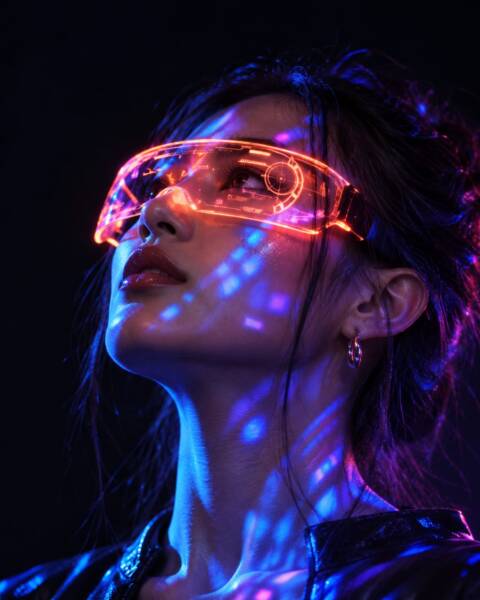
In 2026, smart glasses are becoming a surprisingly serious consumer-tech category. They can take photos, record videos, play music, answer questions with artificial intelligence, translate conversations, identify objects and, on more advanced models, put information directly in front of your eyes.
And the competition is getting much more interesting.
Meta announced an expanded AI-glasses lineup in September 2026, including new Ray-Ban Meta models, audio-focused glasses and improvements to its display-equipped eyewear. Google, meanwhile, says Gemini-powered intelligent eyewear developed with Samsung, Warby Parker and Gentle Monster is arriving in 2026.
So the question is changing.
Instead of asking, “Will smart glasses ever become useful?”, consumers are increasingly asking: Are smart glasses actually worth buying?
The answer depends heavily on what you expect them to do.
Here are the biggest smart glasses pros and cons in 2026, including the benefits that genuinely make sense, the drawbacks manufacturers still haven’t solved and what the latest generation tells us about where wearable computing is going next.
What Are Smart Glasses?
Smart glasses are wearable computers built into something that looks—or at least tries to look—like conventional eyewear.
However, not every pair works the same way.
Some models are essentially AI glasses without a visual display. They use cameras, microphones, open-ear speakers and an AI assistant. You interact with them mainly through voice.
Others include a small display that can show directions, messages, notifications or other information inside your field of view.
Then there are more ambitious augmented-reality glasses that attempt to place interactive digital objects into the physical world.
Google has described its upcoming Android XR eyewear using a similar distinction: some glasses will provide audio-based assistance, while others will have displays capable of presenting information visually.
That difference matters. Asking whether “smart glasses are good” is a little like asking whether computers are good. A lightweight pair of AI camera glasses and a full AR headset may technically belong to the same family, but the experience is very different.
Pro #1: Smart Glasses Can Keep Your Phone in Your Pocket
This may be the most convincing argument for smart glasses.
Think about how many times you pull out your phone every day just to perform a tiny task: checking directions, reading a notification, taking a picture, answering a call or asking a quick question.
Smart glasses can move some of those interactions away from the screen.
Instead of stopping to unlock your phone, you can ask your glasses a question, start playing music or capture what you’re looking at.
Display-equipped glasses go further.
Meta’s Ray-Ban Display, for example, has been adding heads-up navigation and notification features. In September 2026, Meta announced cycling and public-transport navigation along with walking directions that can use visible landmarks rather than relying only on street names.
It doesn’t mean your smartphone disappears.
But it can mean fewer moments staring down at it.
Pro #2: AI Makes Smart Glasses Far More Useful Than Earlier Versions
The biggest change in smart glasses isn’t actually the glasses.
It’s AI.
Earlier generations of connected eyewear were largely cameras and headphones attached to frames. Generative and multimodal AI changes the concept because the glasses can potentially understand what you’re looking at.
Imagine standing in front of a building and asking what it is.
You could look at a restaurant menu and ask about a dish, look at an object you don’t recognize, translate a sign or ask for information about something directly in front of you.
Google says Gemini-powered intelligent eyewear will support tasks including directions, messaging, photography and contextual AI assistance. Meta is similarly building multimodal AI features into its glasses.
This could become the strongest argument for wearing AI rather than simply carrying it.
A smartphone knows what you type.
Smart glasses can potentially understand part of the world you’re experiencing.
Pro #3: Hands-Free Photography Is Surprisingly Convenient
Smart glasses solve one small but very real problem: sometimes the moment is over by the time you get your phone out.
Because the camera sits approximately where your eyes are, you can capture a first-person photo or video without holding anything.
That is useful while walking, cooking, travelling, cycling in appropriate conditions, spending time with your children or doing something that already requires both hands.
It also creates a very different kind of content.
Instead of filming someone else’s perspective, you capture your own.
For creators, travellers and people who regularly record short-form video, this may be one of the most practical reasons to buy smart glasses.
Of course, putting a camera on someone’s face also creates one of the technology’s biggest problems—which we’ll get to shortly.
Pro #4: They Can Be Powerful Accessibility Tools
Some of the most meaningful applications of smart glasses have little to do with entertainment.
For people who are blind or have low vision, an AI system connected to a camera can describe objects, help read text and provide additional information about the surrounding environment.
For people with limited mobility, voice-controlled photography and communications can make everyday technology easier to operate.
Research is also beginning to explore how smart glasses could be designed for people with disabilities rather than treating accessibility as an afterthought. A 2025 Scientific Reports study, for example, worked with 14 people living with aphasia to explore potential smart-glasses applications and barriers.
Real-world users are already describing practical benefits.
US Army veteran Don Overton, who lost his sight during military service, has said he uses AI glasses for tasks such as reading menus and navigating daily life. Marine Corps veteran Noah Currier, who has quadriplegia, has described voice-controlled photography as particularly valuable because he cannot operate a conventional camera with his hands.
That may ultimately prove more important than any futuristic AR demo.
Pro #5: Smart Glasses Finally Look More Like Normal Glasses
Google Glass had a problem before anyone even discussed its software: it looked like Google Glass.
Modern manufacturers have learned that people generally don’t want to wear something on their face that screams “computer”.
Partnerships with established eyewear brands are therefore becoming central to the market.
Meta has worked closely with EssilorLuxottica and Ray-Ban, while Google is developing Android XR glasses with eyewear companies including Warby Parker and Gentle Monster.
This is more important than it sounds.
A wearable device only works if people are willing to wear it.
Comfort, weight, frame shape, prescription compatibility and appearance may matter just as much as processor speed.
Pro #6: Battery Life Is Improving
Battery life has historically been one of the least glamorous realities of wearable computing.
Tiny glasses frames don’t leave much room for batteries.
Manufacturers are gradually improving the situation. Meta’s newly announced Ray-Ban Meta Audio glasses, for example, are rated for up to 12 hours of AI-assistant use on a charge, with additional charging available from their case.
That doesn’t mean every model lasts all day under heavy use.
AR and display-heavy glasses can consume significantly more power.
But we’re getting closer to glasses that behave like something you put on in the morning rather than another gadget you constantly have to charge.
And that brings us to the disadvantages.
Con #1: Privacy Is the Elephant in the Room
If someone points a smartphone camera at you, you usually know you’re being filmed.
Smart glasses make that distinction less obvious.
The camera is sitting directly on someone’s face.
Meta’s glasses include a capture LED intended to indicate when recording is taking place, and Meta says disabling or covering the LED disables camera capture.
Even with those protections, the broader debate hasn’t disappeared.
Privacy concerns around AI wearables intensified in 2026 as smart glasses and always-available recording devices became more common. Questions include not only whether people know they’re being recorded, but what happens to captured data afterward, how AI services process it and whether sensitive material may be stored or reviewed.
Social etiquette hasn’t caught up either.
Is it acceptable to wear camera-equipped glasses in a doctor’s office? A changing room? A business meeting? A classroom? Someone else’s home?
Technology companies can design recording indicators.
They can’t design universal social norms overnight.
Con #2: AI Can Be Wrong
Imagine asking your glasses:
“What medication is this?”
“What street am I on?”
“Is this food safe for someone with an allergy?”
“What does that sign say?”
The convenience is obvious.
So is the risk.
Generative AI can misunderstand visual information or provide inaccurate answers. Putting AI directly into your field of view may make the experience feel more authoritative even when the underlying model is uncertain.
Smart-glasses AI is therefore best treated as an assistant, not an infallible second pair of eyes.
For casual queries, an occasional mistake may simply be annoying.
For navigation, medical information, safety or other consequential situations, verification matters.
Con #3: Battery Life Still Limits Full AR Glasses
Basic audio glasses are becoming more efficient.
Full augmented-reality glasses are a much harder engineering problem.
Displays, cameras, wireless connectivity, processors, microphones, speakers and spatial tracking all consume energy—and everything has to fit into something lightweight enough to sit comfortably on your nose.
Snap’s latest Specs illustrate the challenge. The 2026 model pushes much further into genuine augmented reality but has been reported with around four hours of battery life and a $2,195 price tag.
That might work for development, specialist applications or enthusiasts.
It’s harder to describe as an effortless replacement for ordinary glasses.
Con #4: The Best Models Can Still Be Expensive
Smart glasses now cover an unusually large price range.
At one end, increasingly mainstream AI glasses cost a few hundred dollars. Meta announced glasses starting at $249 in September 2026, while its new Ray-Ban Meta Audio models start at $349.
Display glasses can cost considerably more.
Meta’s Ray-Ban Display has been priced from $799, while Snap’s newest Specs sit above $2,000.
Then add prescription lenses, optional lens treatments or accessories.
That makes the value proposition complicated.
If you’re mainly using them to play Spotify and occasionally take a photo, a pair of earbuds plus your existing smartphone may accomplish much of the same job for less.
Con #5: They Add Yet Another Device to Your Digital Life
Smart glasses are often marketed as a way to reduce dependence on your smartphone.
Ironically, they can also create another ecosystem you have to maintain.
There’s another battery to charge.
Another app.
Another account.
Another set of privacy permissions.
Another device that receives software updates.
Another piece of hardware that may eventually become incompatible with future services.
The ideal smart glasses should make technology disappear into the background.
Poorly designed ones do the opposite: they give you one more gadget to babysit.
Con #6: Social Acceptance Is Still a Work in Progress
Even if smart glasses look completely normal, that can create its own problem.
People may not know when you’re using them.
During a conversation, are you listening?
Reading a message?
Recording?
Asking an AI assistant about the person in front of you?
These questions will become increasingly important as smart glasses move into offices, restaurants, schools and public spaces.
Interestingly, not every company believes smart glasses should be invisible.
Interview Spotlight: Evan Spiegel on Why Smart Glasses Should Look Different
In a September 2026 interview with The Times, Snap co-founder and CEO Evan Spiegel discussed the company’s new Specs augmented-reality glasses and took an approach that differs noticeably from manufacturers trying to disguise technology inside conventional frames.
His argument, in essence, is that advanced smart glasses don’t necessarily need to pretend they’re ordinary eyewear.
Snap’s Specs are deliberately recognizable as technological devices. That can carry a social advantage: people around the wearer immediately understand that something different is being used.
The glasses also include a visible recording indicator designed to make camera use clearer to people nearby.
Spiegel’s broader vision is ambitious. Rather than treating glasses as a camera accessory for your smartphone, he sees augmented-reality eyewear as a new computing platform where digital information blends with the physical environment. Current Specs can run AR applications, respond to hand gestures and perform tasks ranging from translation to interactive visual computing.
There’s a fascinating tension here.
Meta and Google’s consumer strategy increasingly focuses on making smart glasses look familiar enough that people will wear them every day.
Snap is effectively asking whether advanced glasses should look like technology on purpose.
Privacy may ultimately make that question just as important as fashion.
Are Smart Glasses Worth It in 2026?
For the first time, the answer can genuinely be yes—for the right user.
If you regularly take first-person photos, make calls on the move, use voice assistants, travel frequently, want real-time translation or benefit from hands-free accessibility features, today’s AI glasses can already be useful.
But they’re not magic.
They won’t fully replace your smartphone, and the most ambitious AR glasses remain constrained by cost, battery life, weight and software maturity.
Privacy is an even bigger unresolved issue.
The technology is advancing faster than the etiquette surrounding it.
That means buying smart glasses in 2026 isn’t only a hardware decision. You’re also deciding how comfortable you are wearing cameras, microphones and AI systems throughout your day.
Smart Glasses in 2026: What’s Coming Next?
The most important trend may be the transition from smart glasses as accessories to smart glasses as AI interfaces.
Google’s entry through Android XR could broaden the market considerably because its Gemini ecosystem can connect glasses to services people already use on their phones. Google’s first intelligent eyewear models with partners including Warby Parker and Gentle Monster are scheduled to begin arriving in fall 2026.
Meta is pushing in several directions simultaneously: inexpensive AI eyewear, conventional Ray-Ban designs, performance-focused Oakley products and glasses with displays. In September 2026 it also announced an expansion to more than 100 eyewear options across its broader glasses lineup by the end of the year.
The battle may therefore move away from pure hardware specifications.
The winning platform could be the one with the AI assistant that best understands what the wearer is seeing while remaining fast, useful and trustworthy.
The Bottom Line
The biggest advantage of smart glasses is easy to understand: technology can come to you instead of making you constantly reach for a screen.
That could mean photographing something without grabbing your phone, hearing a translation while talking to someone, getting directions while keeping your eyes ahead or asking an AI assistant about something you’re looking at.
The disadvantages are equally significant.
Cameras raise legitimate privacy concerns. AI sometimes gets things wrong. Display-equipped models remain expensive. Battery life becomes challenging as features grow more ambitious. And society hasn’t fully decided when wearing a computer on your face is appropriate.
Still, smart glasses in 2026 feel very different from earlier attempts at wearable computing.
They are no longer only futuristic prototypes looking for a reason to exist.
Some already solve real problems.
And if AI continues moving from our phones into the physical world around us, the question may soon stop being whether smart glasses will become mainstream.
The more interesting question will be what happens when wearing AI becomes as normal as wearing glasses.

TechnologyHQ is a platform about business insights, tech, 4IR, digital transformation, AI, Blockchain, Cybersecurity, and social media for businesses.
We manage social media groups with more than 200,000 members with almost 100% engagement.